

The right room, chair and tier. Before anyone starts.
A case that goes straight through when it should have been seen, or waits in a queue nobody owns, is a decision too. HONESTAS scores each case first, then sends it to a decision room with a named chair and the right tier of scrutiny. The routing is recorded like any other decision.
- Room
- Motor claims
- Chair
- Aoife Ryan
- Due
- 5 working days
- If no chair
- Maria Okonjo, 4 h
| Tier | This case |
|---|---|
| 1 · Quick room | |
| 2 · Room with a chair | Assigned |
| 3 · Full room | |
| 4 · Two signatures | |
| 5 · Referred |
Score first. Then route.
Triage runs on every case AI touches: a new claim, a quote, a renewal price, a referral, a bind under a binder. It runs before anyone starts work, and it decides how much scrutiny the case gets.
Score
Each case is scored on what is at stake, the signals open on it and the customer's situation. Each score says what it was worked out from.
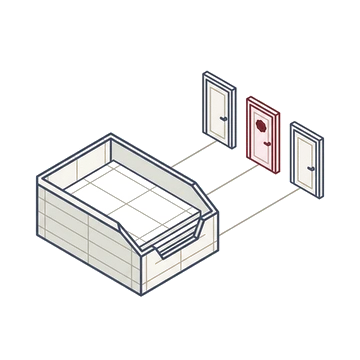
Tier
Your rulebook turns the scores into one of five tiers, from a quick room a handler chairs to a referral to a committee.


Convene
The case goes to the room for its line, with a named chair who holds the authority. The chair is never the person who proposed the decision.
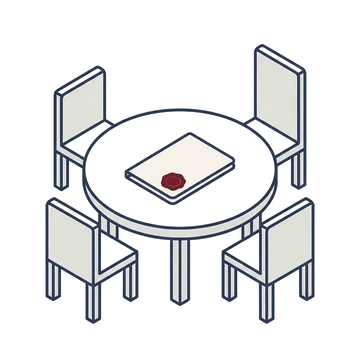
Record
The routing is sealed with its scores, its tier and the rule that chose it. You can always show why a case went where it went.
More at stake, more people in the room.
The tiers are yours to set, line by line. A windscreen claim and a disputed liability claim do not need the same room, and HONESTAS does not pretend they do.
- Thresholds written in your own rulebook, with a version
- A wait that runs out goes up a level, never through
- A chair who cannot accept in time hands it to a named deputy
- 1 · Quick room
A handler chairs. One AI seat drafts, a second model checks. Minutes, for routine cases inside clear limits.
- 2 · Room with a chair
A case for, a case against and a challenger, in front of a chair with the authority to rule.
- 3 · Full room
Seats for the SIU, legal, underwriting or the loss adjuster, each with its own brief.
- 4 · Two signatures
Above the chair's own authority, a second named person signs before anything is sealed.
- 5 · Referred
To a claims committee, the board or a capacity provider, with the file already assembled.
Where triage shows up in the work.
Triage runs behind every screen. These are the places people meet it.
Seats declared first
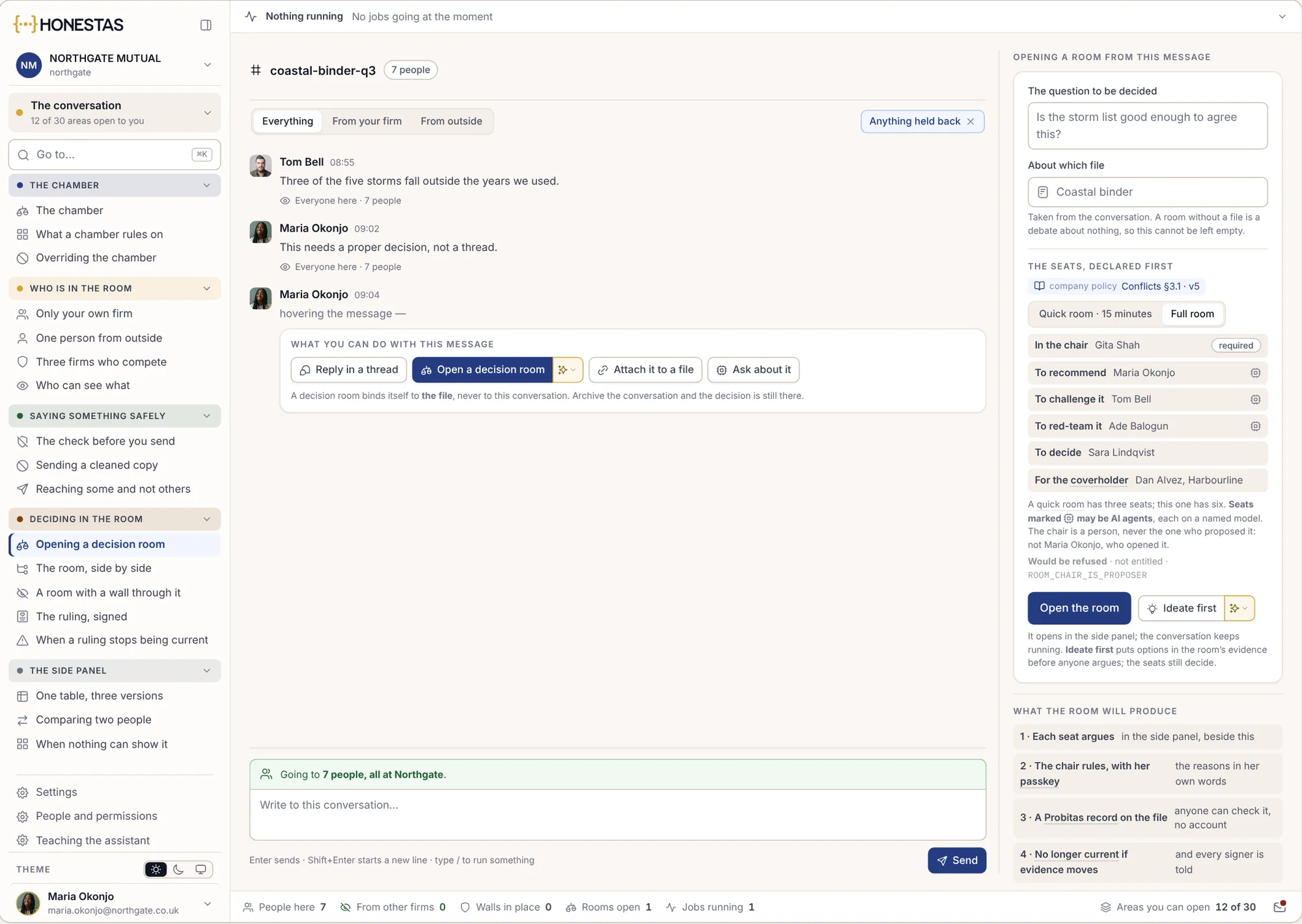
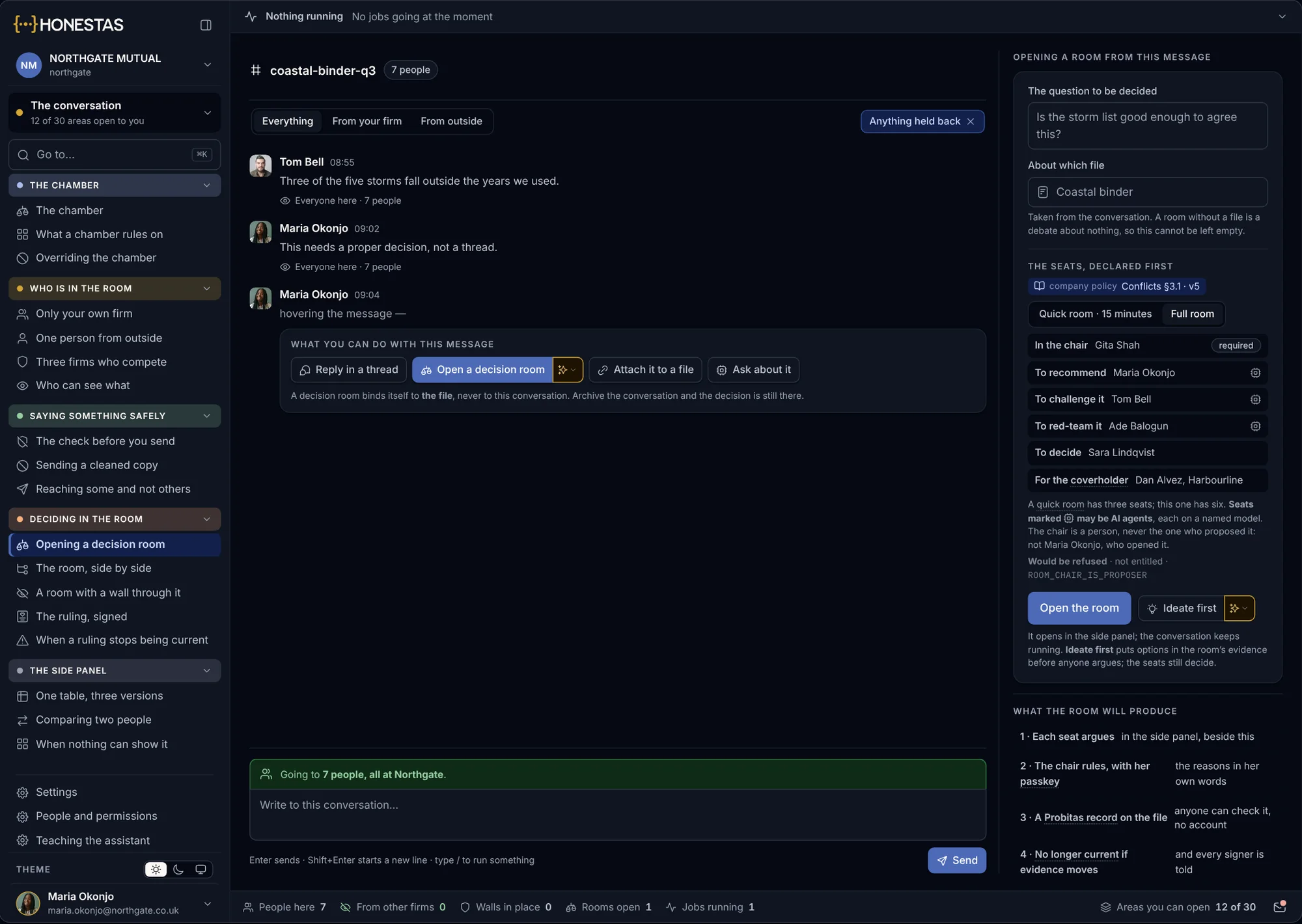
A room opened from a message names the question, the file and every seat before anyone argues. A quick room has three seats. This one has six.
- A room without a file is refused
- The chair is never the proposer
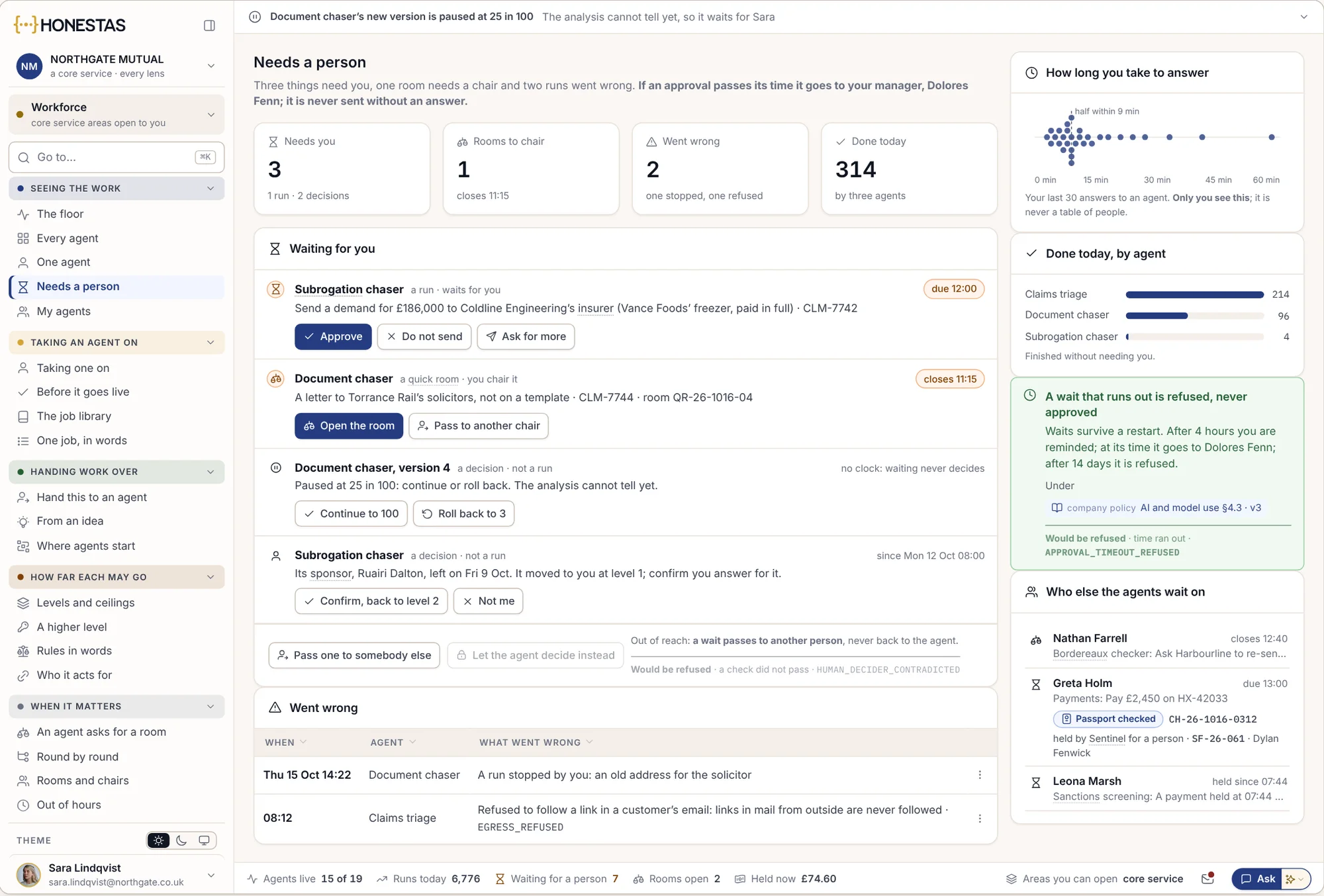
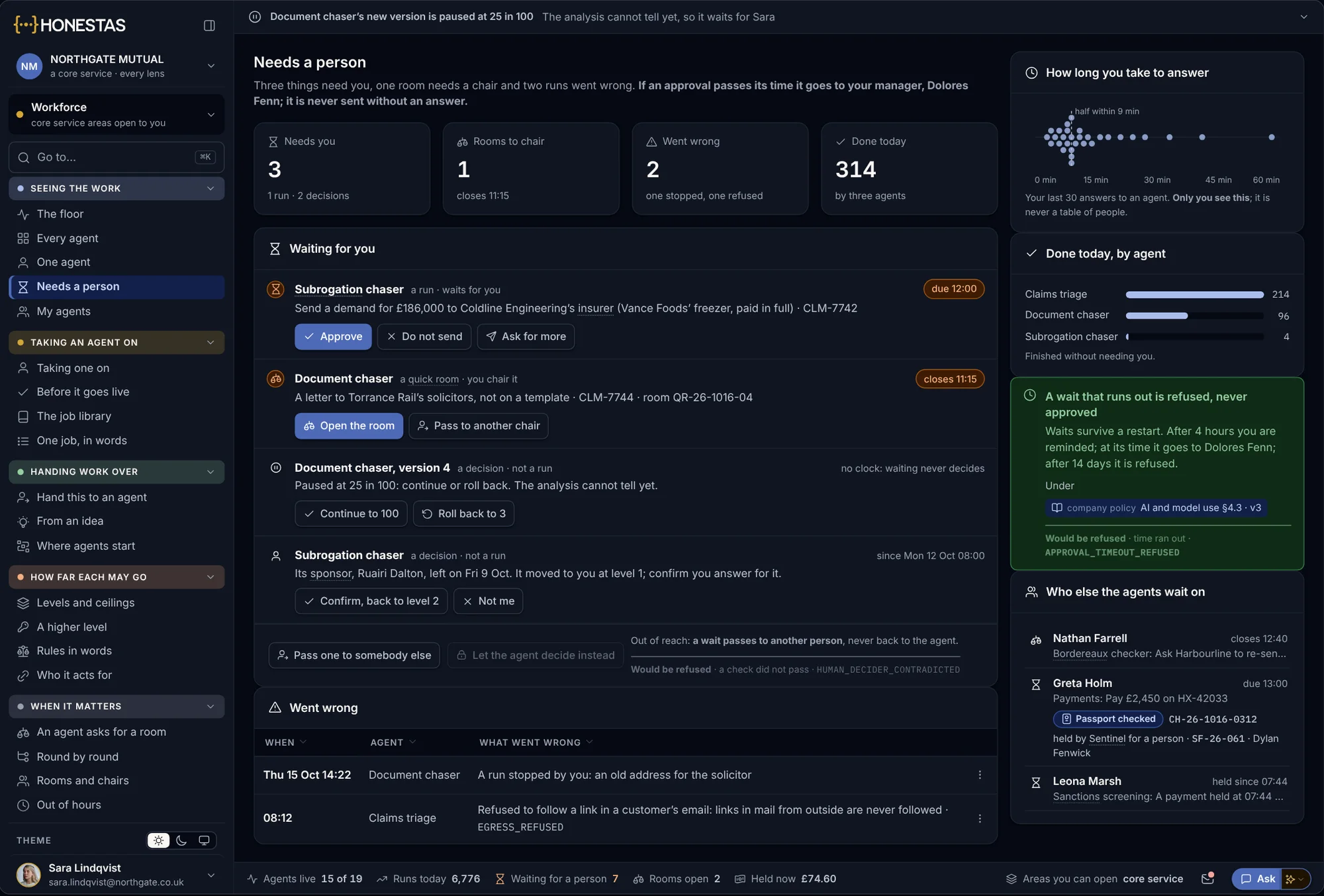
What is waiting on you
Rooms to chair, approvals and decisions agents are waiting on, each with its deadline. A wait that runs out goes to your manager. It never approves itself.
- A room to chair, with when it closes
- Waits that run out are refused, never approved
Triage on a live call
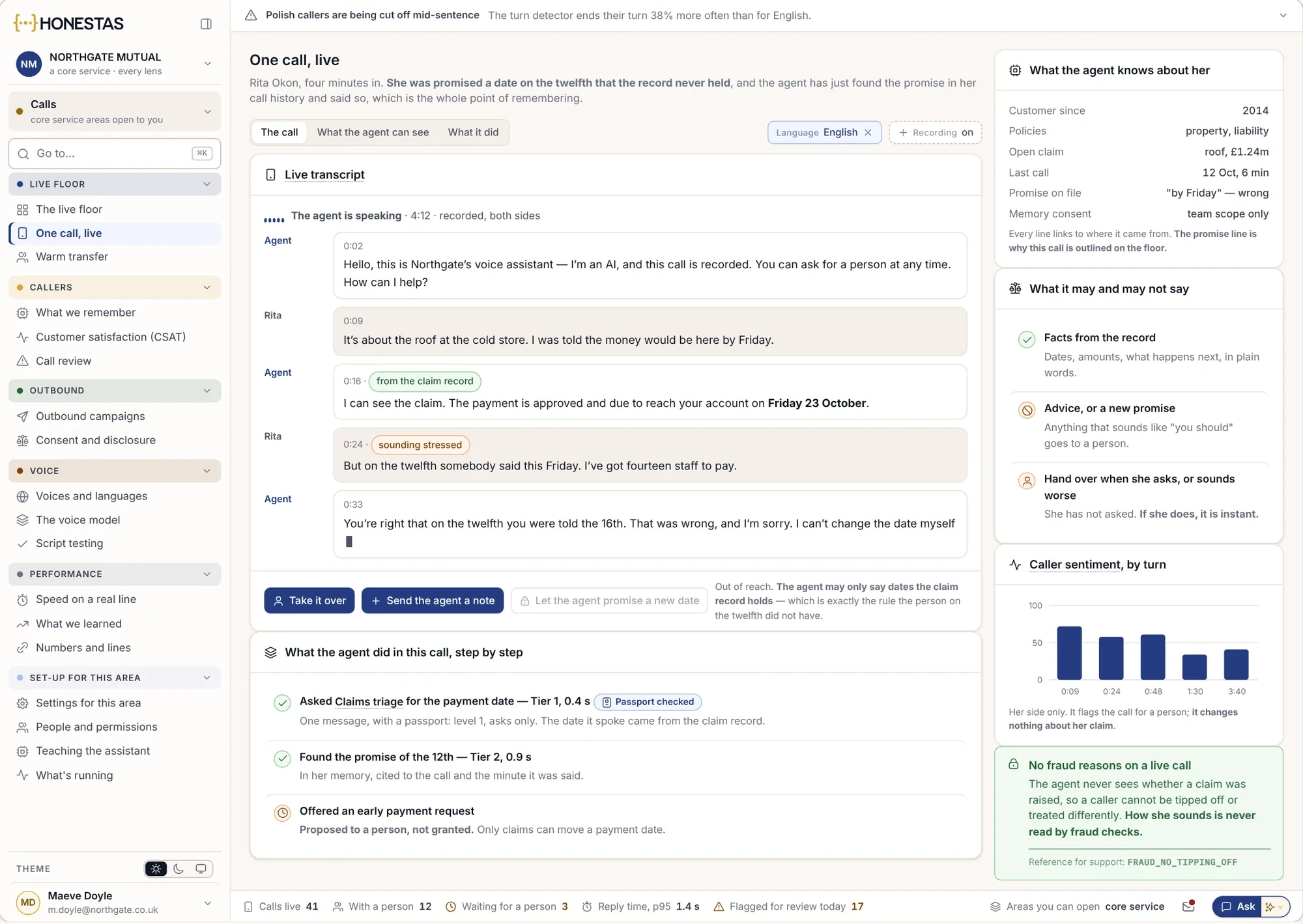
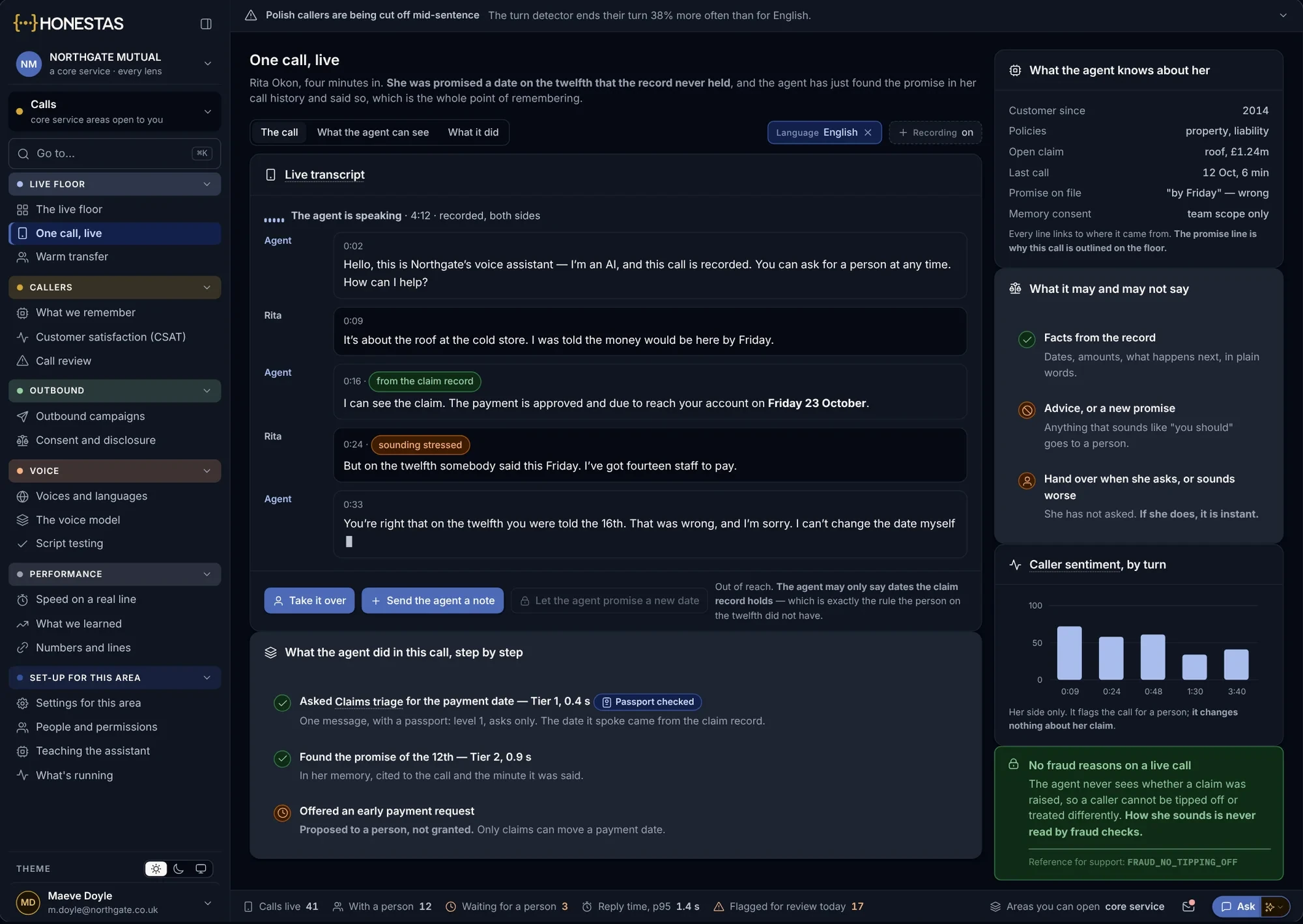
While a customer is on the phone, the voice assistant asks claims triage for the payment date. Tier 1, and the answer comes from the claim record.
- The tier and time of each request, shown
- Anything new goes to a person
Why the routing has to be on the record.
Supervisors ask who looked at a decision and why that was enough. A recorded routing answers both.
- GDPR Article 22Regulation (EU) 2016/679People may not be subject to a decision based solely on automated processing that significantly affects them. Triage records that a person was in the room.
- AI Act Article 14Regulation (EU) 2024/1689, human oversightHigh-risk AI must be overseen by people who can override it. For life and health pricing, from 2 December 2027.
- EIOPA Opinion on AIAI governance and risk management, 6 August 2025Governance in proportion to the risk of each use. Tiers are that proportion, written down.
AI Act dates as amended by Regulation (EU) 2026/1744, the Digital Omnibus, published in the Official Journal on 24 July 2026. Not legal advice. Certification and legal opinions stay between you and your advisers.
What people ask.
Does every case really go to a room?
Every case AI touches does. A routine one goes to a quick room a handler chairs and is done in minutes. What changes with the tier is how many seats there are and who must sign, not whether a person is there.
Who sets the thresholds?
You do, line by line, in your own rulebook. Each version of the rulebook is kept, so a routing can always be read against the rules in force on the day.
What happens if nobody accepts the chair?
The case goes to a named deputy after a set time. A wait that runs out is refused and moved up, never pushed through.
Can triage send a case straight to a decline?
No. Triage decides who looks at a case and how closely. It never decides the outcome.
Can we see why a case went where it went?
Yes. The routing is a sealed record of its own, with the three scores, what each was worked out from, the tier, the rule and the chair.
Go deeper
Route one claim type properly.
Bring a line where cases wait too long or go through unseen. We will set its tiers, rooms and chairs, and show the routing on the record.