

The model points. A person decides.
Link analysis lays out claims, parties, repairers, phone numbers and addresses so an investigator can follow a pattern. Every signal shows where it came from. Nobody is refused a claim by a model alone, and a referral to the SIU is a decision with its own record.

Reasons, not scores. Sources, not hunches.
A handler sees why a claim was flagged, from which records, and the case for the customer beside the case against. The claim keeps moving while they decide.
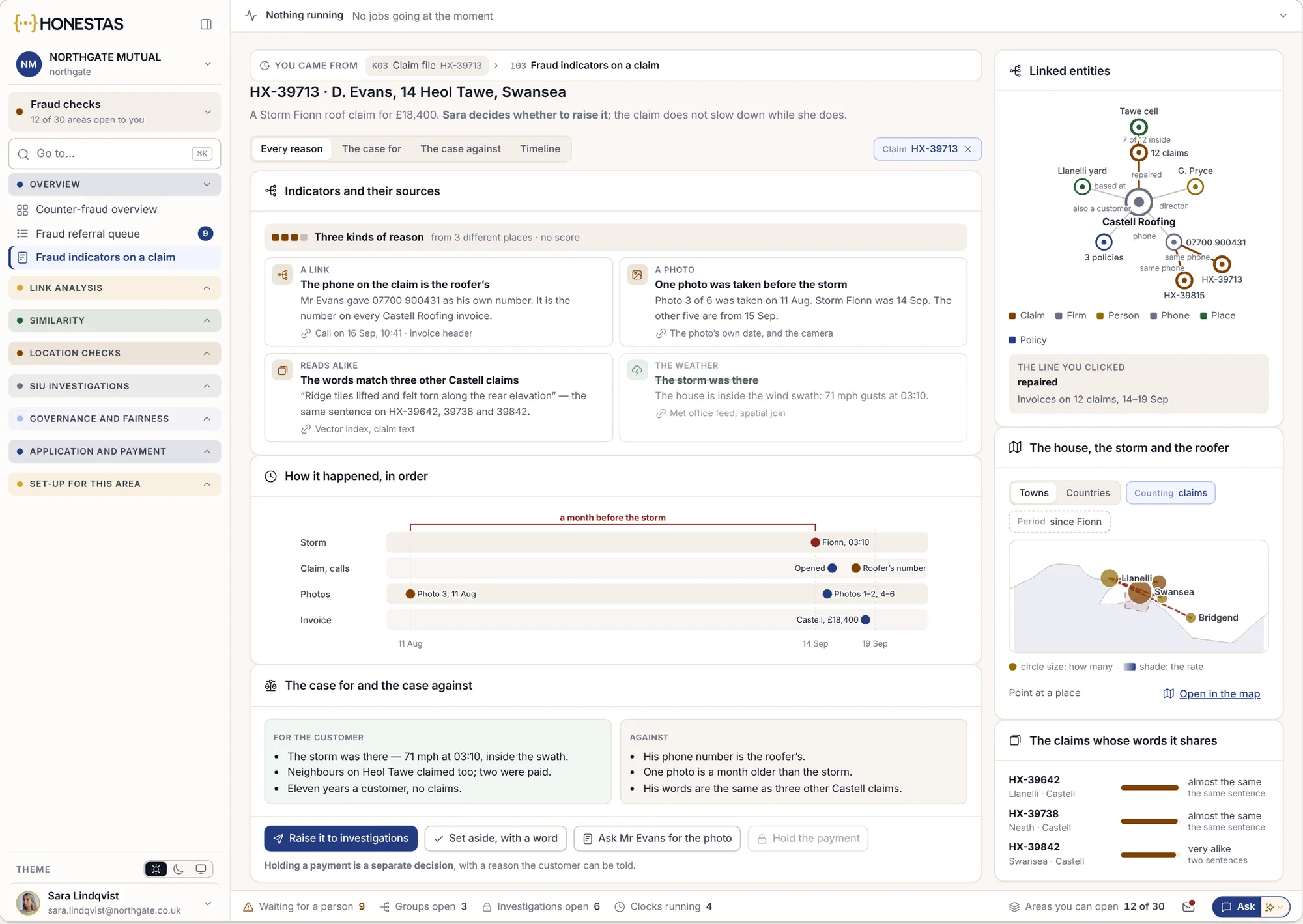
Warning signs on one claim
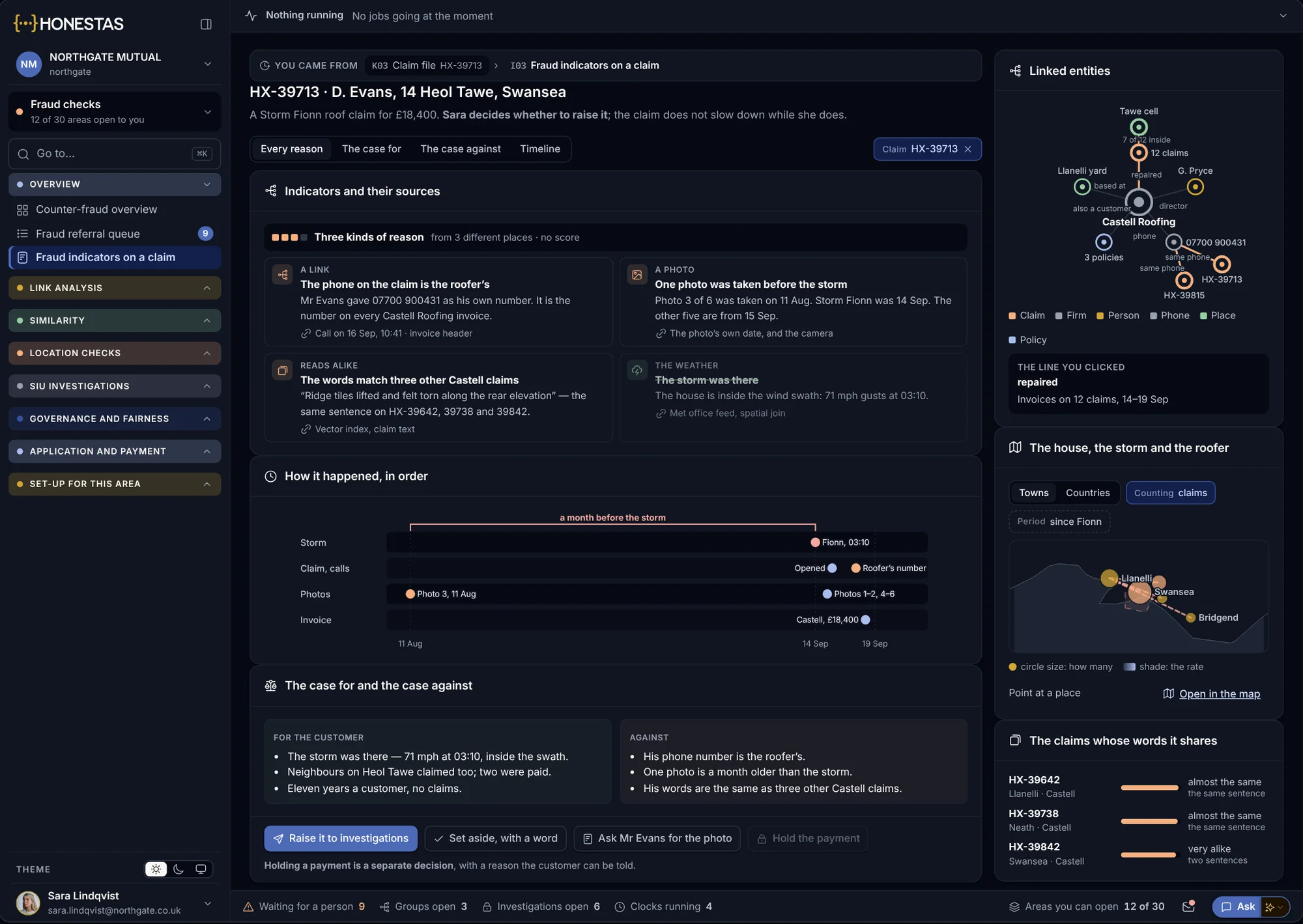
Three kinds of reason from three different places, each with its source, and no score. The case for the customer sits beside the case against.
- A link, a photo date, words that match other claims
- The case for and the case against
- Holding a payment is a separate decision
The links between two firms, in words
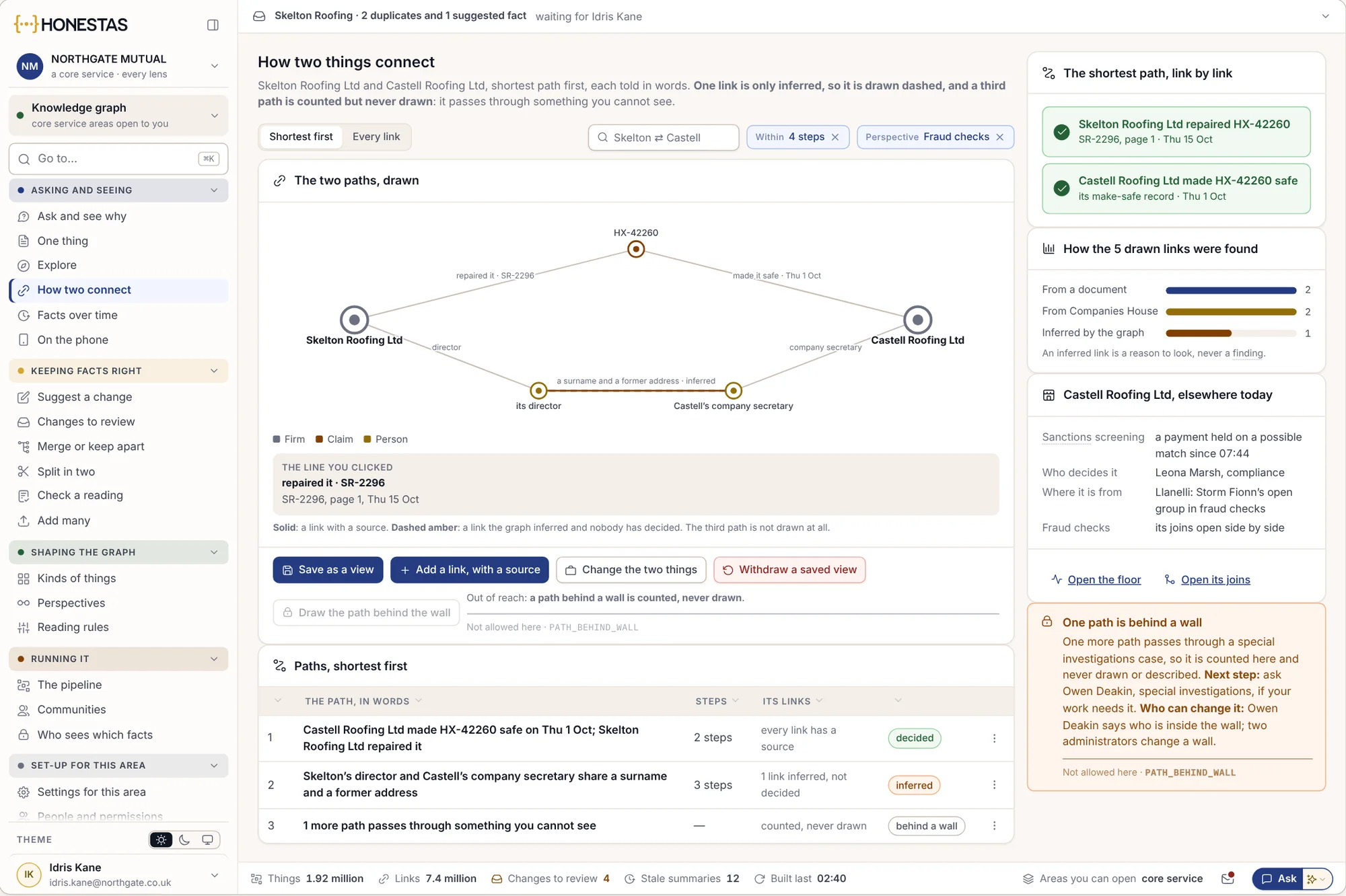
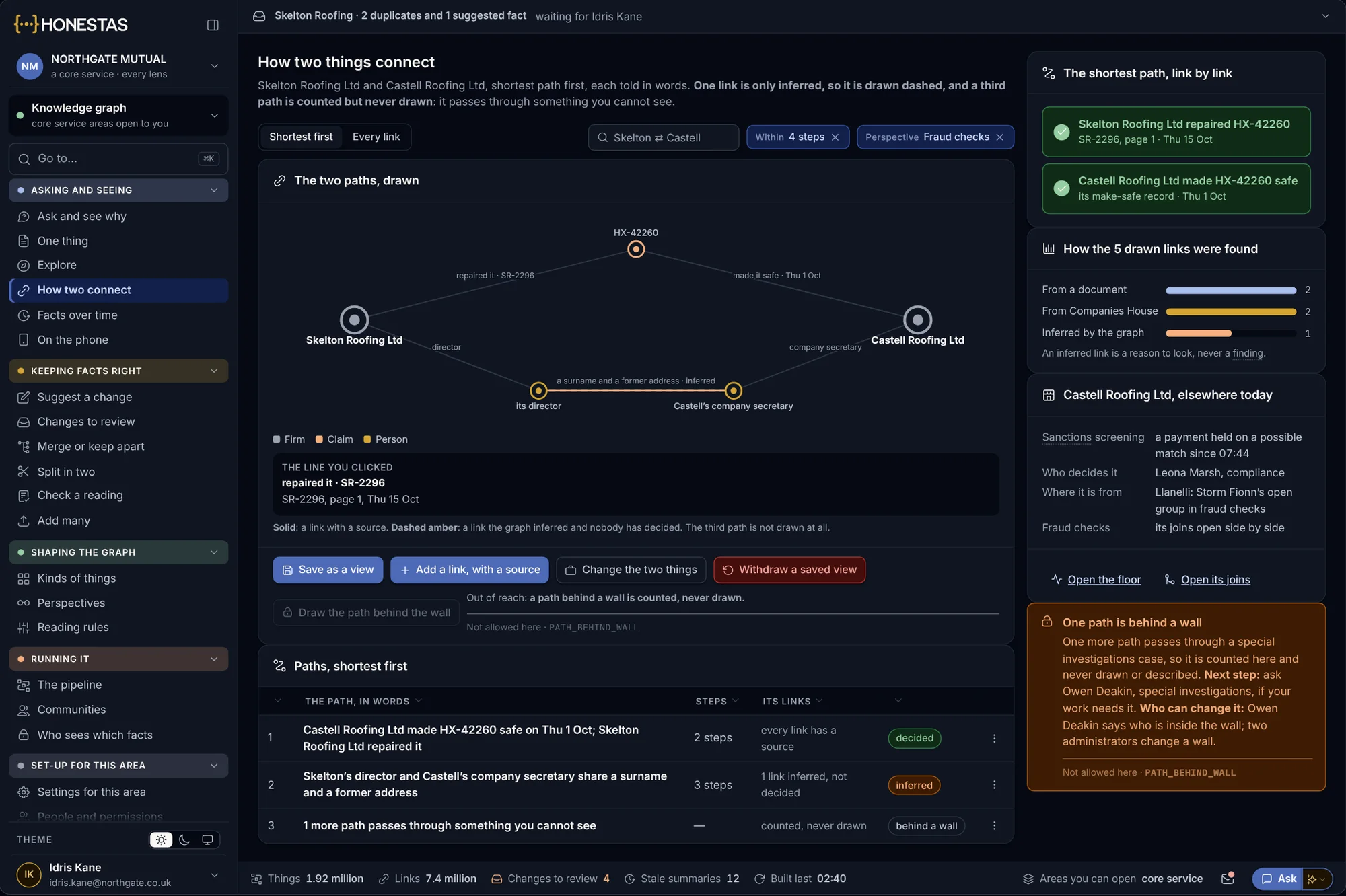
The shortest path between two roofers, link by link. A link the graph only inferred is drawn dashed, and a path behind a wall is counted, never drawn.
- Every link with its source
- Inferred links marked as a reason to look, never a finding
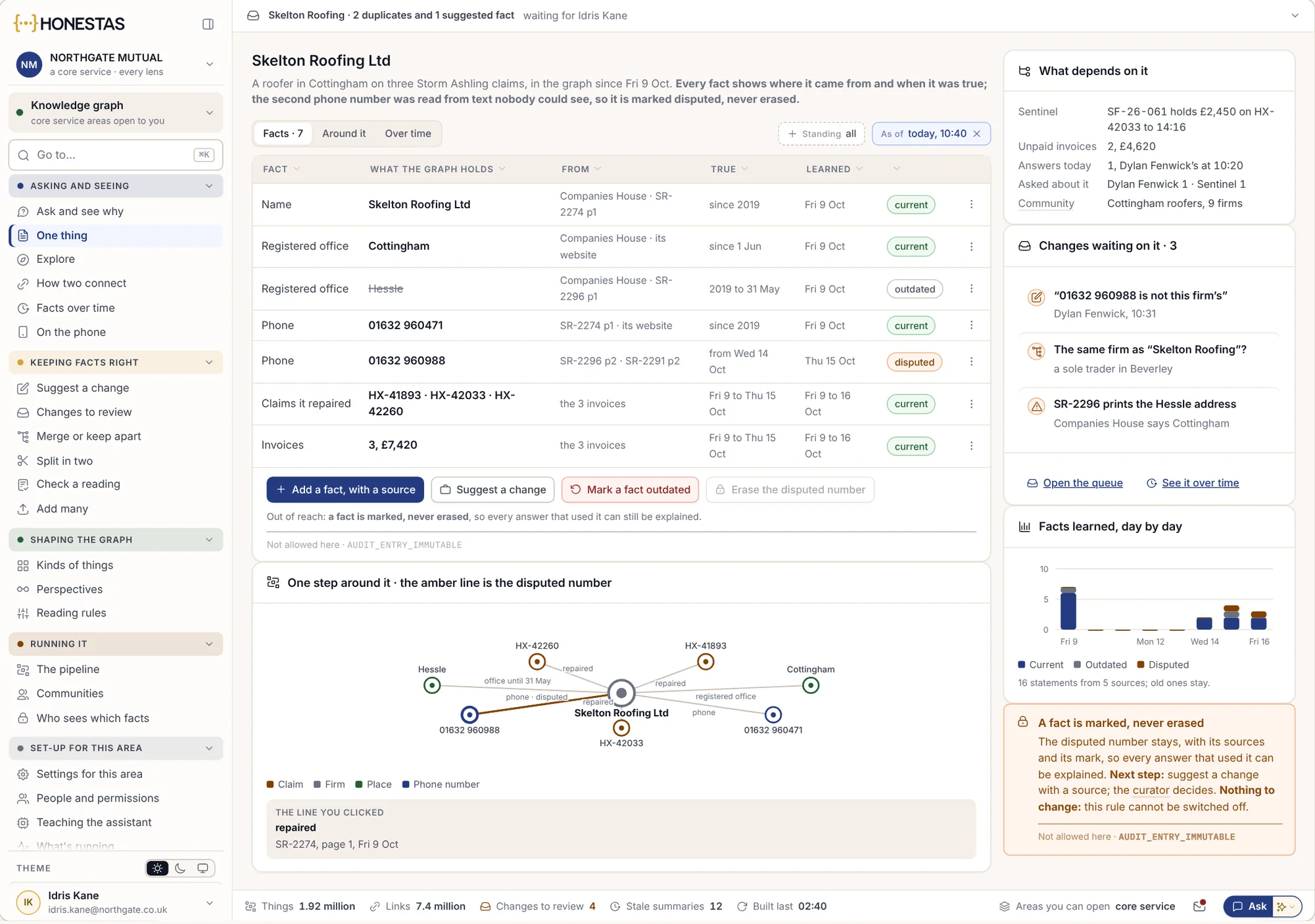
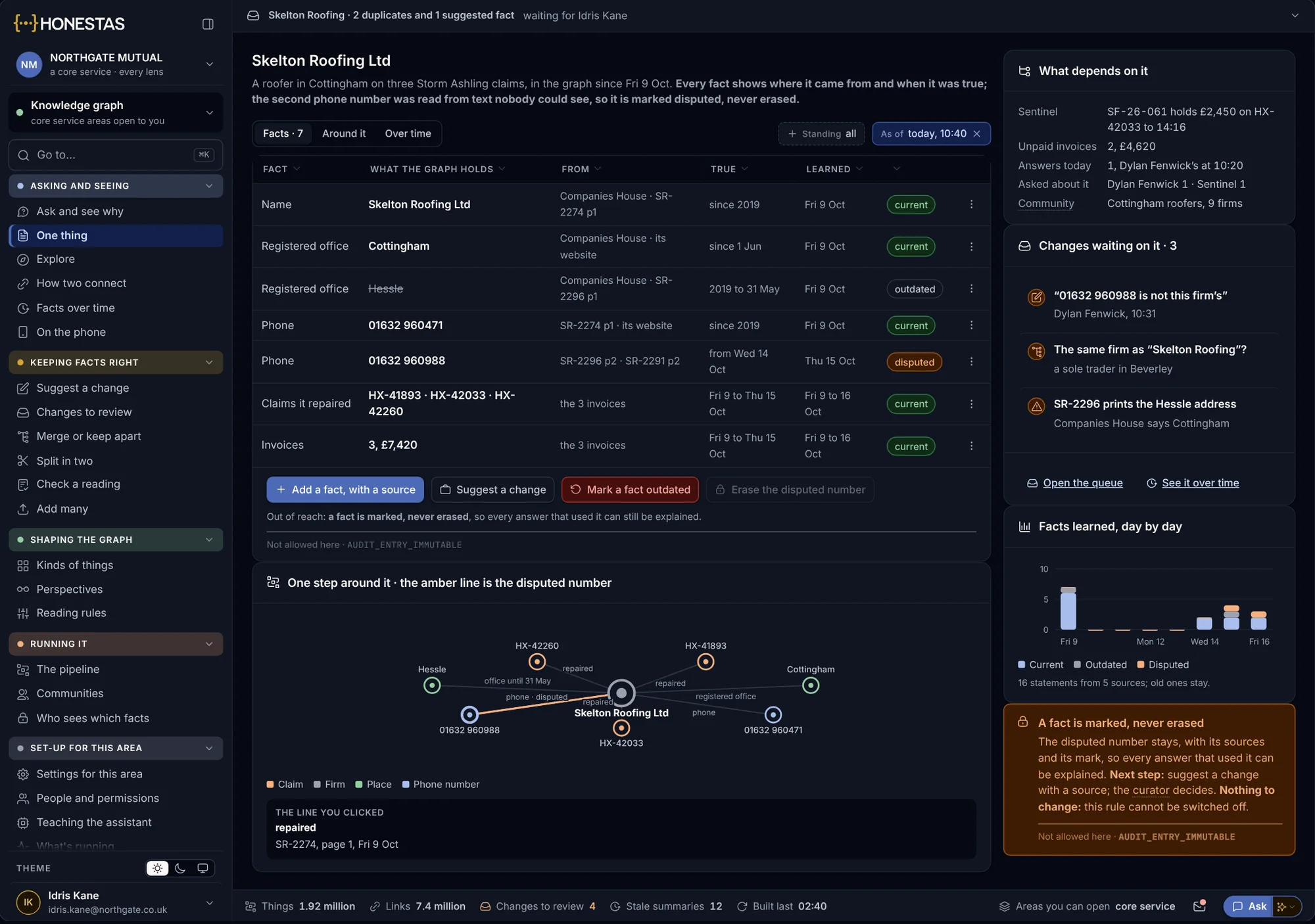
Everything held about one repairer
Every fact about a firm, with where it came from and when it was true. A disputed phone number is marked, never erased, so each answer that used it can still be explained.
- A source for every fact
- Disputed facts kept and marked
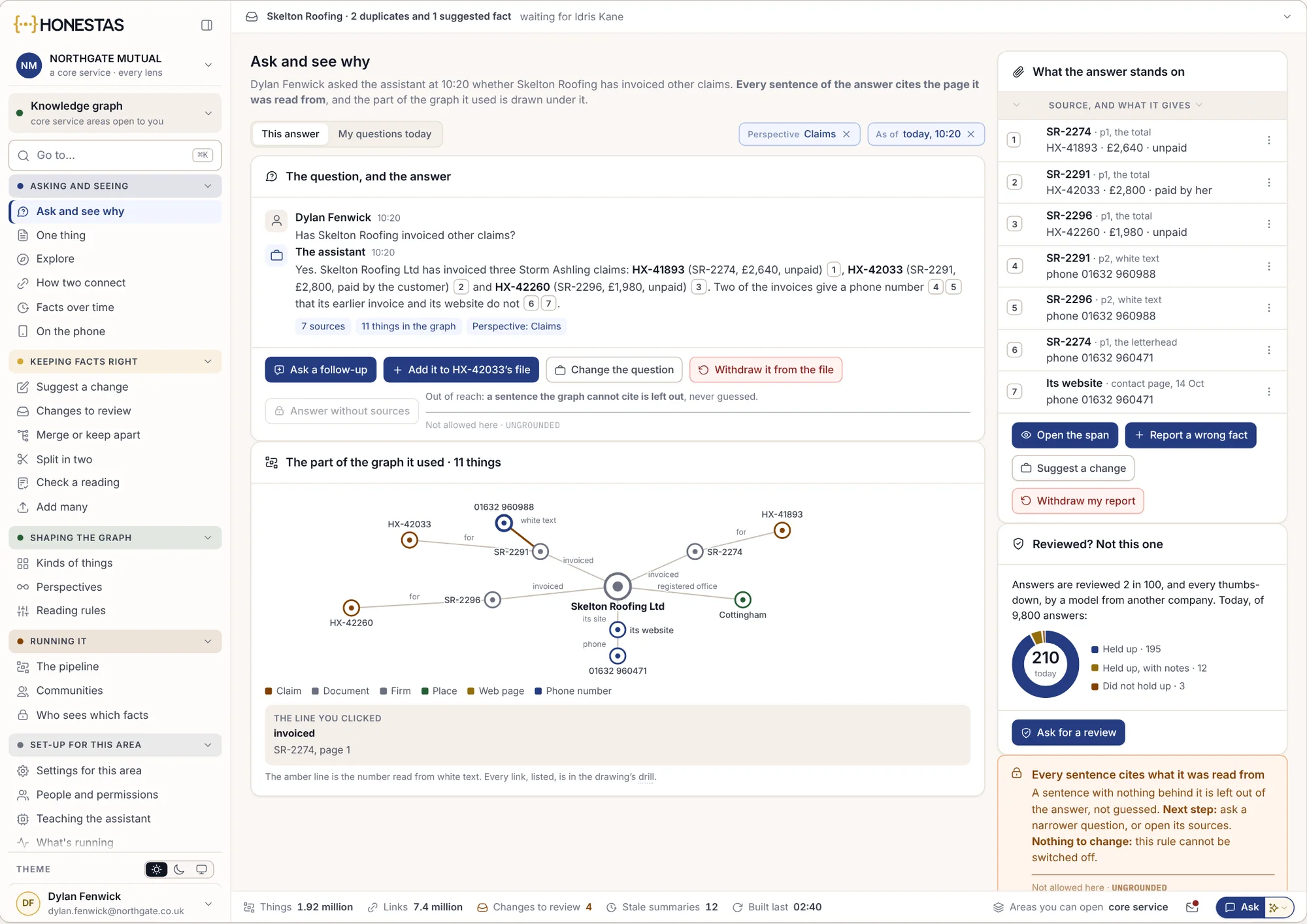
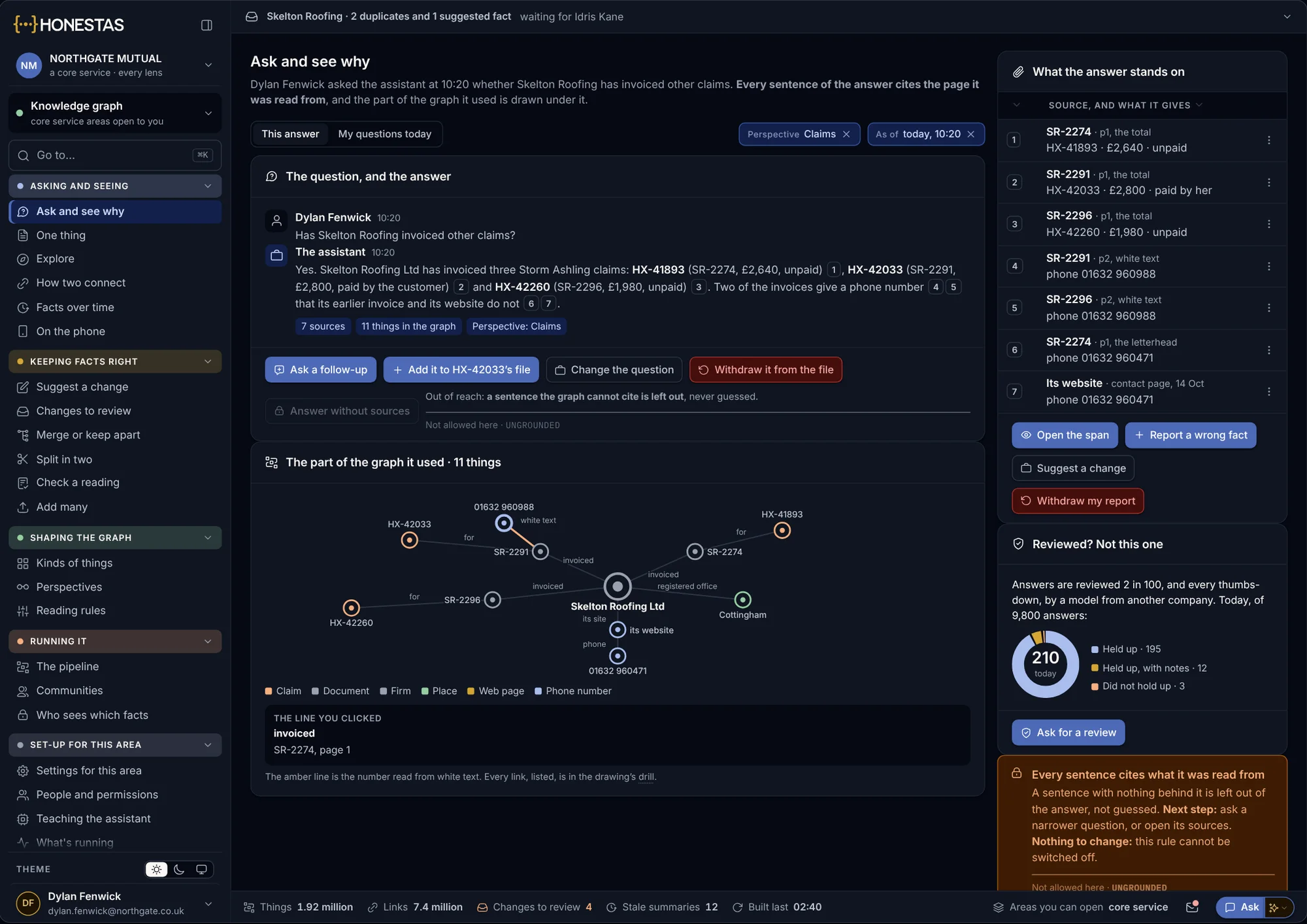
Ask, and see what the answer rests on
Has this roofer invoiced other claims? Every sentence of the answer cites the invoice page it was read from, and the part of the graph it used is drawn beneath.
- A sentence with no source is left out
- Reviewed answers marked
Four steps, and a person at each one that matters.
Signals found
A nightly run and link analysis look for shared phones, shared words, photo dates and repeat repairers.
Shown with sources
Each signal names the record it came from, beside the case for the customer. There is no score to hide behind.

A person decides
Raise it to investigations, set it aside with a reason, or ask the customer a plain question.


Each claim on its own
A group can be investigated together. Each claim is still decided, and paid, on its own merits.
A referral is a decision. It gets its own record.
Sending a claim to special investigations changes how a customer is treated, so it is decided like any other decision. A named person raises it, a named person authorises it before any data is collected, and the scope of what may be collected is written down and sealed.
- Authorised before collection, never after
- The scope of what may be collected, in writing
- The customer is not tipped off, and not treated differently on a call
- Closing a referral needs a reason in words

Castell Roofing, referred to the SIU
- Decision
- Refer twelve claims to special investigations
- Raised by
- Idris Kane, claims handler, in his own words
- Authorised
- Sara Lindqvist, claims lead, before any data was collected
- May collect
- Invoices and phone numbers on these twelve claims, Storm Fionn only
- Payments
- Each claim decided on its own. None held because of the group
- On calls
- The customer is not tipped off and not treated differently
- Scope
- It records why a person looked. It does not say anyone committed fraud
Fair to the honest customer. Firm with the rest.
Each referral and each refusal carries the reasons a person gave, so it can be explained to the customer, an ombudsman or a supervisor.
- GDPRRegulation (EU) 2016/679, Article 22No decision with legal or similar effect based solely on automated processing, without safeguards.
- SCHUFACJEU, Case C-634/21, 7 December 2023A score can itself be an automated decision when others rely on it heavily.
- Dun & Bradstreet AustriaCJEU, Case C-203/22, 27 February 2025People can ask how an automated decision about them was reached, in words they can follow.
- EIOPA opinion on AIAI governance and risk management, 6 August 2025Fairness, human oversight and records for the AI systems insurers use.
Not legal advice.
About fraud signals.
Does HONESTAS give claims a fraud score?
No. It shows reasons, each with its source, beside the case for the customer. A person decides what they mean.
Can a model refuse a claim?
No. A model can point at a pattern. Refusing a claim is a decision a named person makes, with reasons, in a decision room.
Is the customer told about a referral?
Not while it is open, so an investigation is not prejudiced. They are never treated differently on a call, and every decision about their claim carries reasons that can be explained to them.
What can investigators collect?
Only what the authorised scope allows, written down before collection starts. Asking for more is a new decision.
Can investigators see behind walls?
No. A path through a special investigation behind a wall is counted, so others know it exists, and never drawn.
Go deeper
Bring the referrals you already make.
Bring a handful of last year’s SIU referrals. We will show each one with its signals, its sources and a record of who decided.