

The ratio held. The mix underneath it moved, and nobody decided that.
HONESTAS puts pricing, reserving and appetite through the same decision rooms as claims. A rate change shows what it moves before it goes live. Appetite is a rule the room checks before anyone binds. A shift in the mix becomes a decision with a named owner.
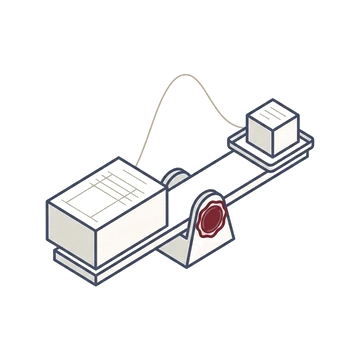
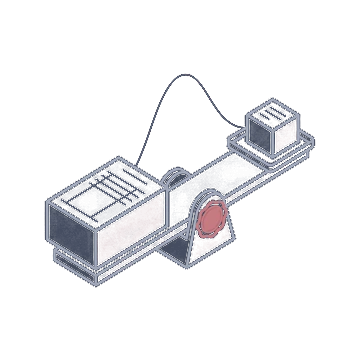
Damage claims now carry more than half the cost.
In Irish private motor the loss ratio came down in 2025. Underneath it, damage claims grew from under a third of settled claim cost to more than half in four years, and without releases from prior-year reserves the current-year combined operating ratio was 99%, not 93%. A headline ratio can hold while the book beneath it changes shape.
Source: Central Bank of Ireland, National Claims Information Database, Private Motor Insurance Report 8, published 20 October 2026.
Every price, reserve and limit is a decision someone signs.
Your actuaries and models still set the price. HONESTAS makes sure each change is seen, argued and owned before it reaches the book.
Price on the evidence
A rate change shows every factor it moves, the cells it touches and what it costs across the book. It goes for approval with that evidence, and its author cannot approve it.
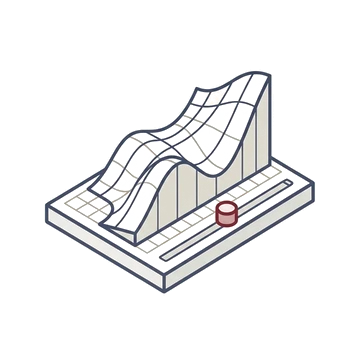

Appetite in the room
Appetite, capacity and underwriting authority are rules the room checks before a quote is bound. A risk outside appetite goes to a named underwriter, with the reason it was referred.

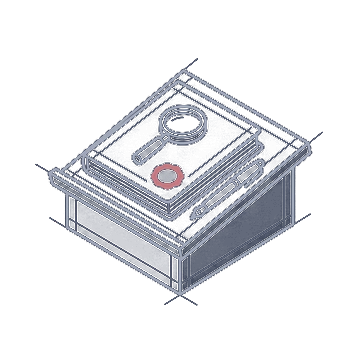
Reserve with reasons
Reserve changes and IBNR assumptions are argued and signed like any other decision, and each one is pinned to the table version it used.

A shift gets an owner
When a segment or claim type moves past the threshold you set, a room opens for the person who owns it. They accept it, reprice it or limit it, and say why.


Renewal prices checked before they go out.
In Ireland, a renewing home or motor customer may not be charged more than an equivalent customer renewing for the first time. In the UK, no more than an equivalent new customer. HONESTAS checks each renewal price against that rule before it is sent, and keeps the check with the price.
- Each renewal compared with the price that market's rule sets as its ceiling
- A price that fails is held, with its reason
- The annual pricing review answered from sealed records
- Central Bank of IrelandInsurance Requirements Regulations 2022No price walking in home and motor from 1 July 2022, and a yearly review of pricing policies and processes.
- Financial Conduct AuthorityPS21/5, general insurance pricing practicesHome and motor renewal prices no higher than the equivalent new-business price, from 1 January 2022.
Sources: Central Bank of Ireland, 15 March 2022 · FCA PS21/5. Not legal advice.
The change, the room and the exposure behind it.
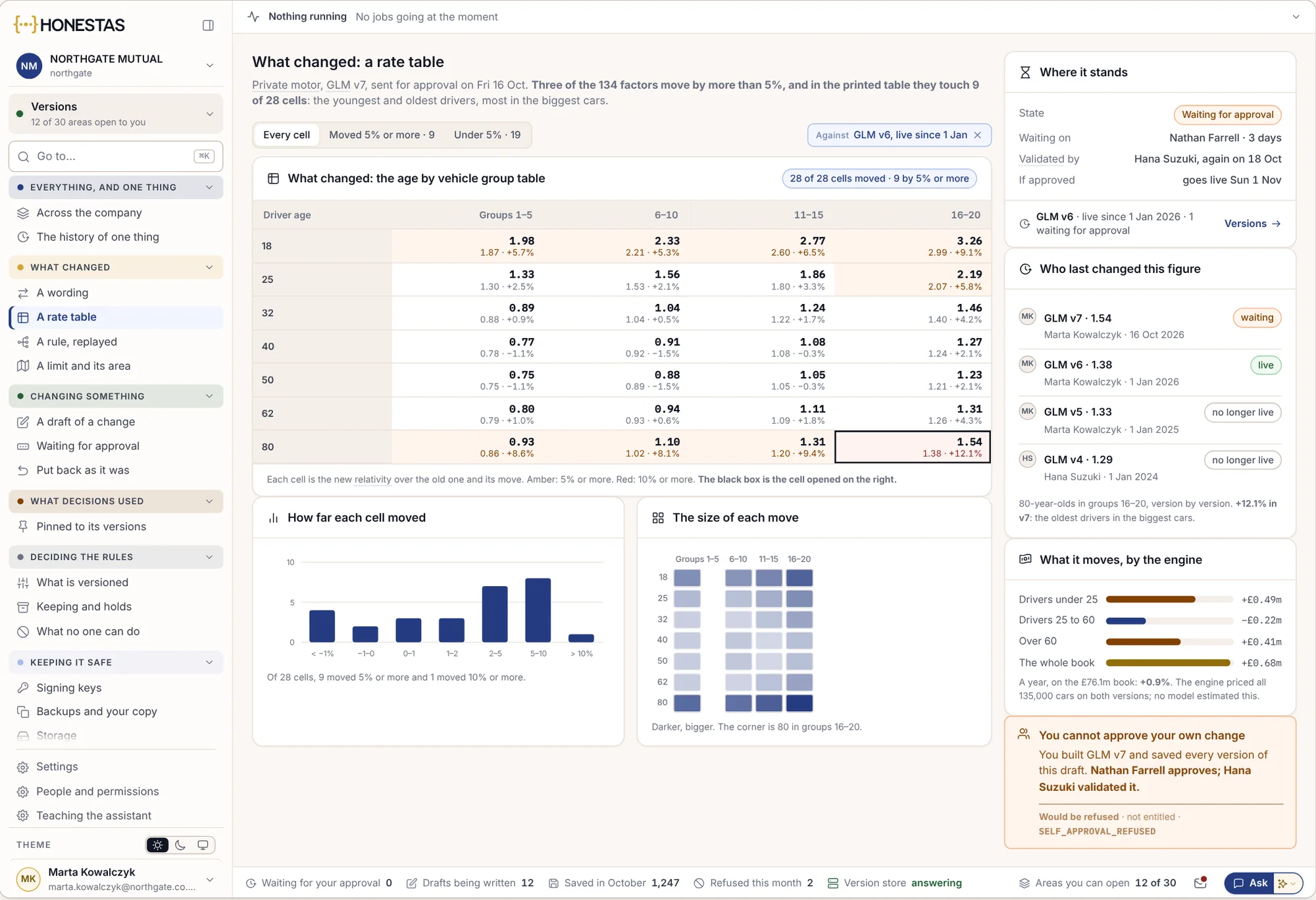
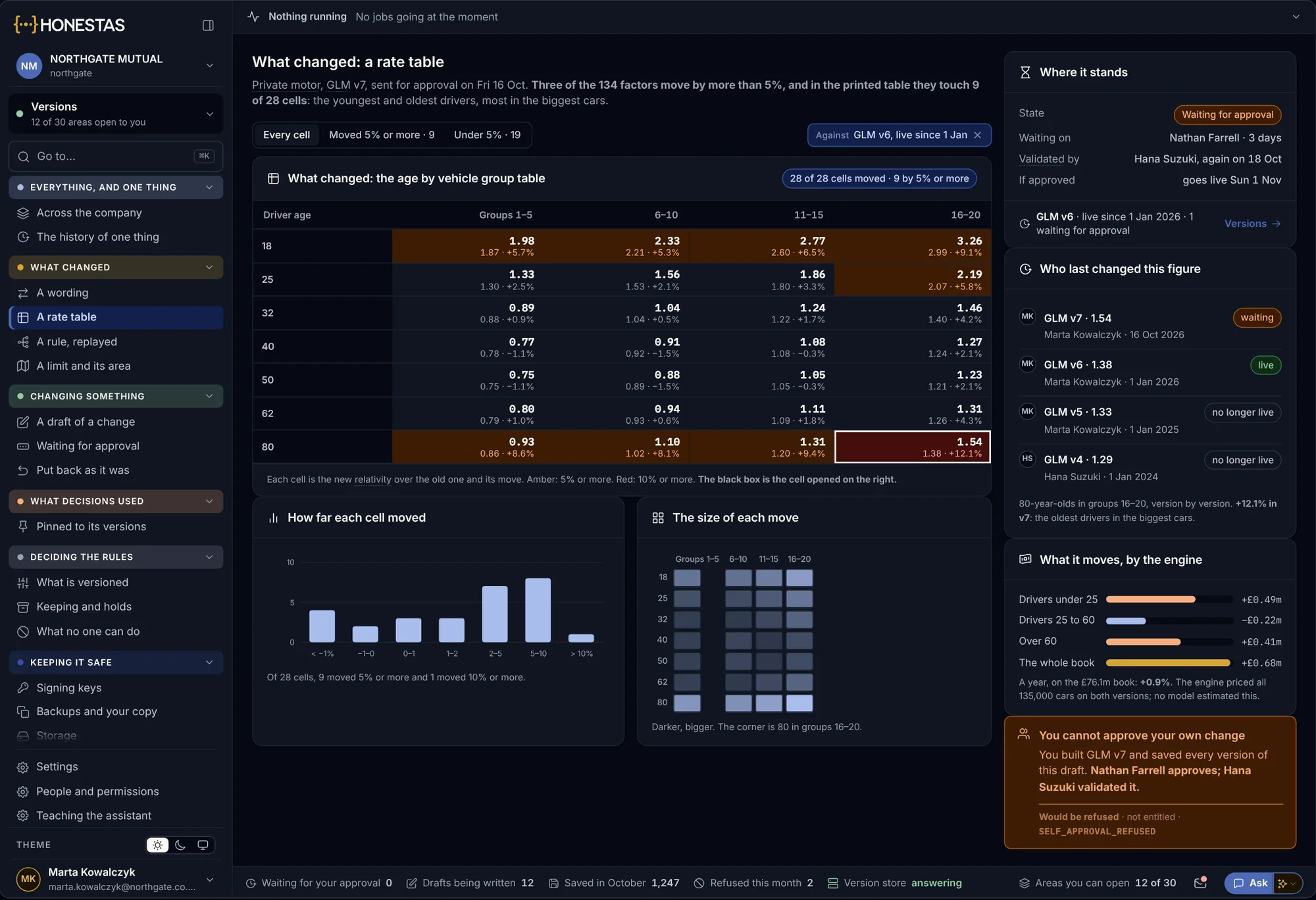
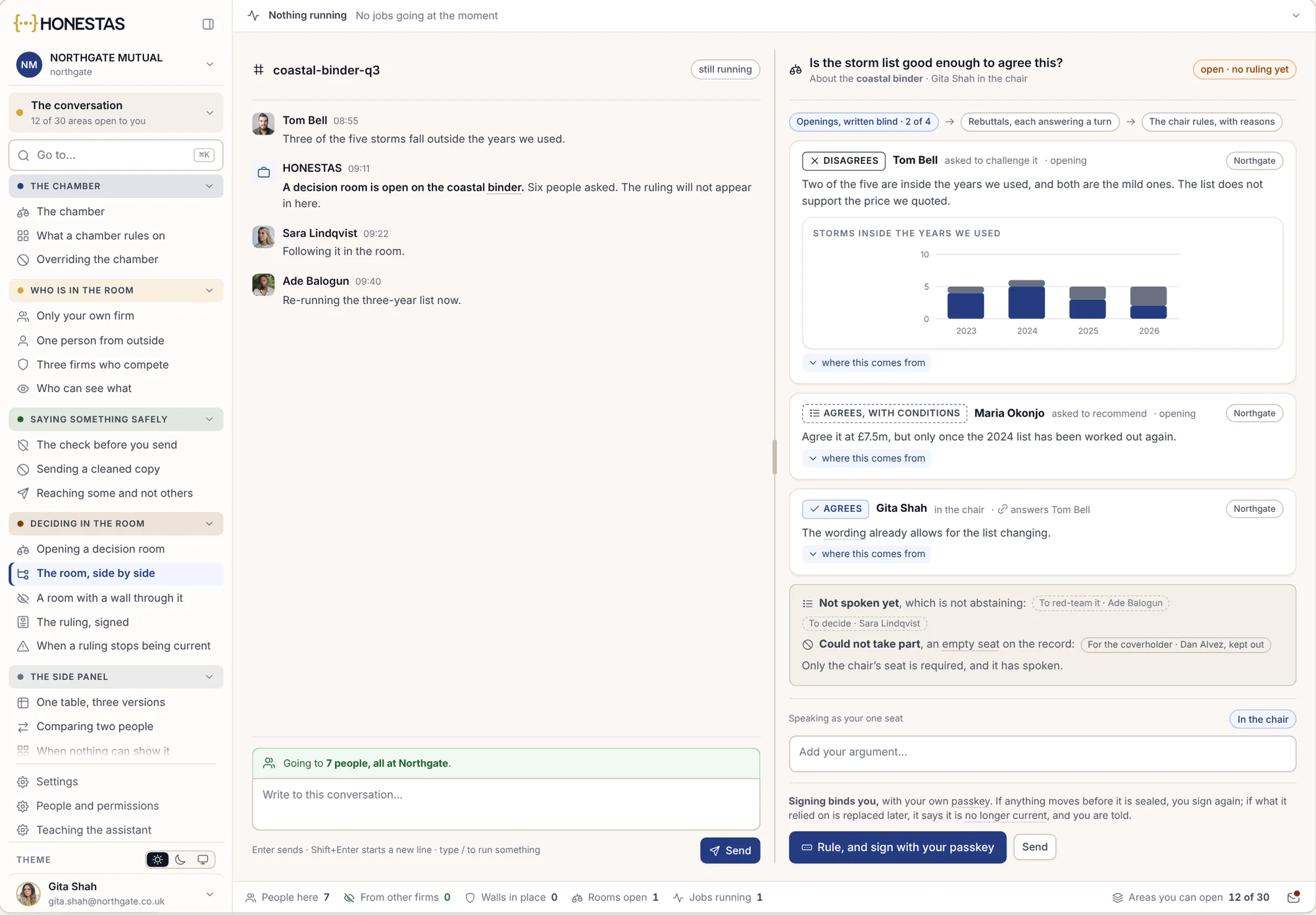
These are HONESTAS screens, shown with sample data from Northgate Mutual, a sample organisation.
What a rate change moves
Every cell of the table, old against new, with what the change does to drivers, cars and the whole book before anyone approves it.
- Moves over 5% and 10% marked
- Every version of each figure kept
- The author cannot approve their own change
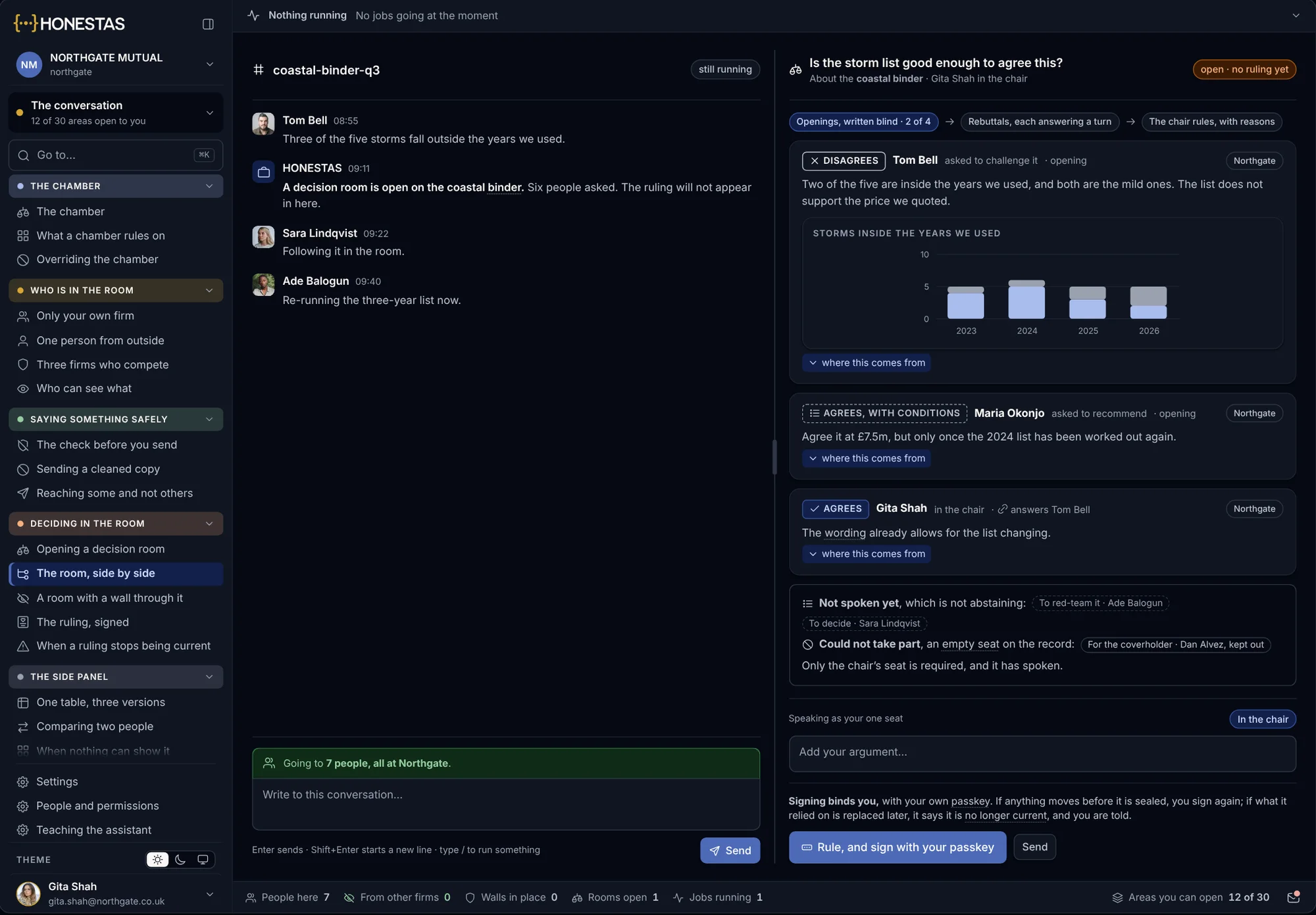
A price argued before it is agreed
The challenger says the storm list behind a coastal binder price rests on the mild years. The chair rules with every argument in front of her.
- Openings written blind
- Each argument shows where it comes from
- The ruling signed with a passkey
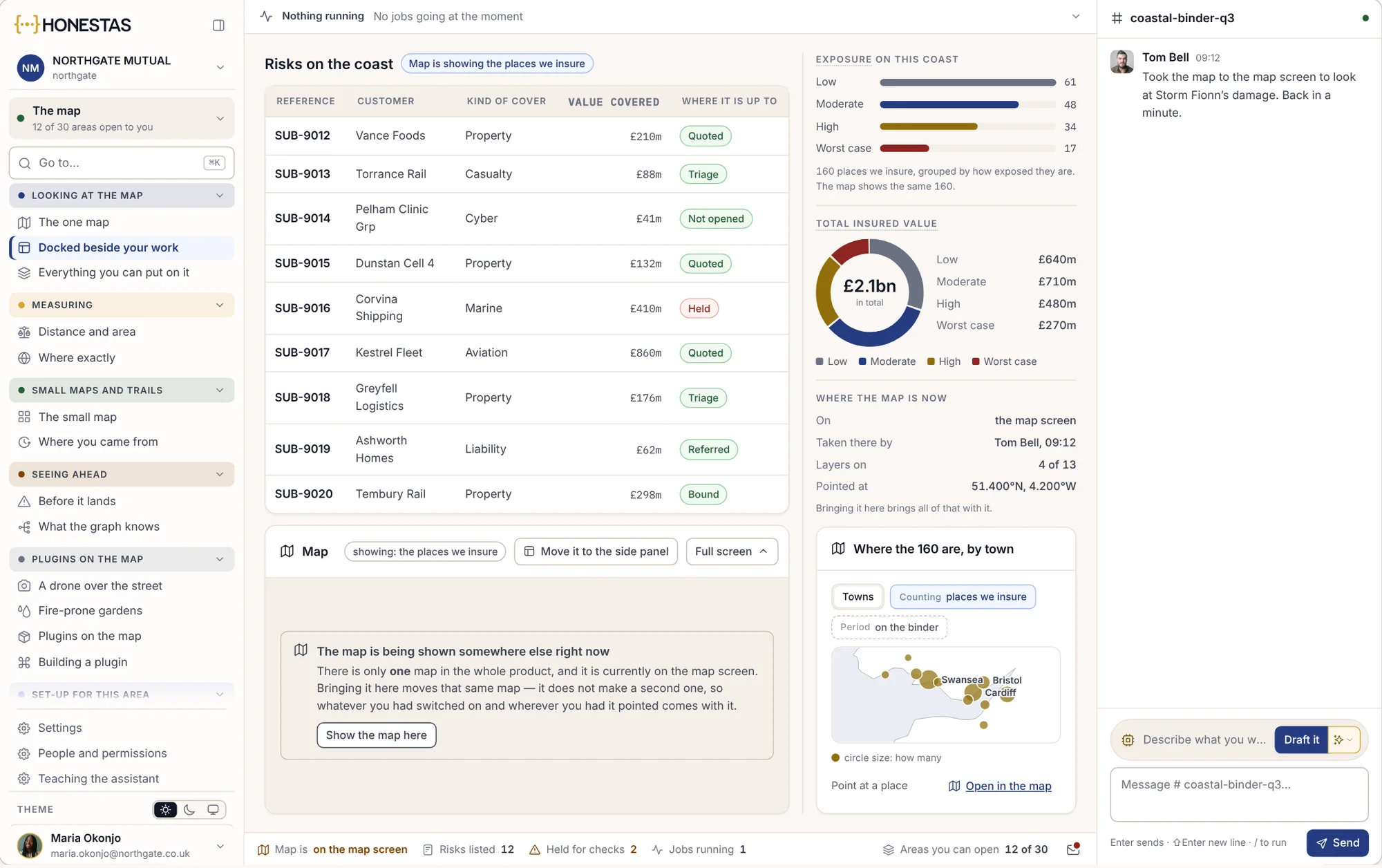
The exposure beside the list
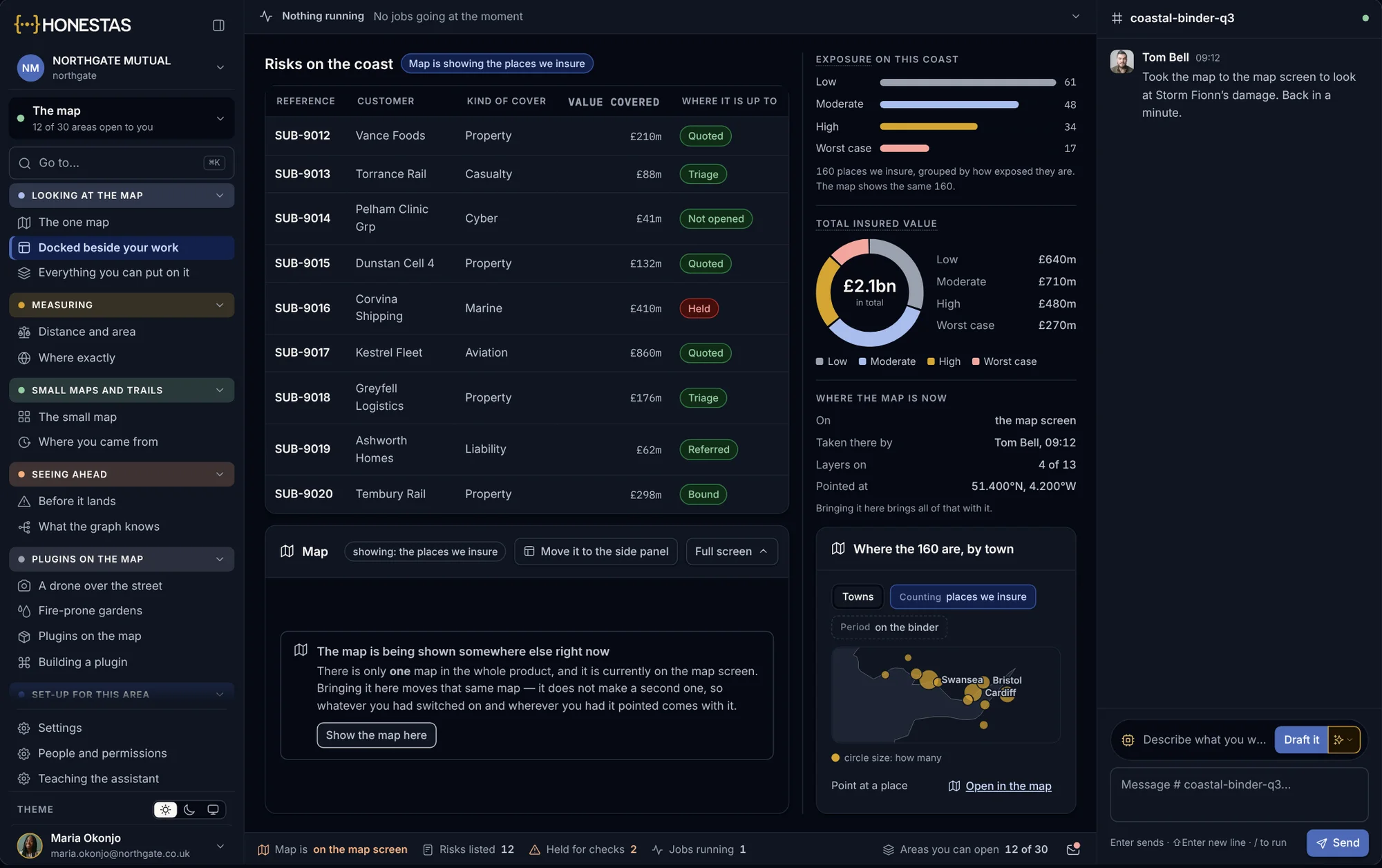
The risks on one stretch of coast, grouped by how exposed they are, with the total insured value and the map next to the list it belongs to.
- Exposure grouped low to worst case
- Total insured value by band
- The same 160 places on the map
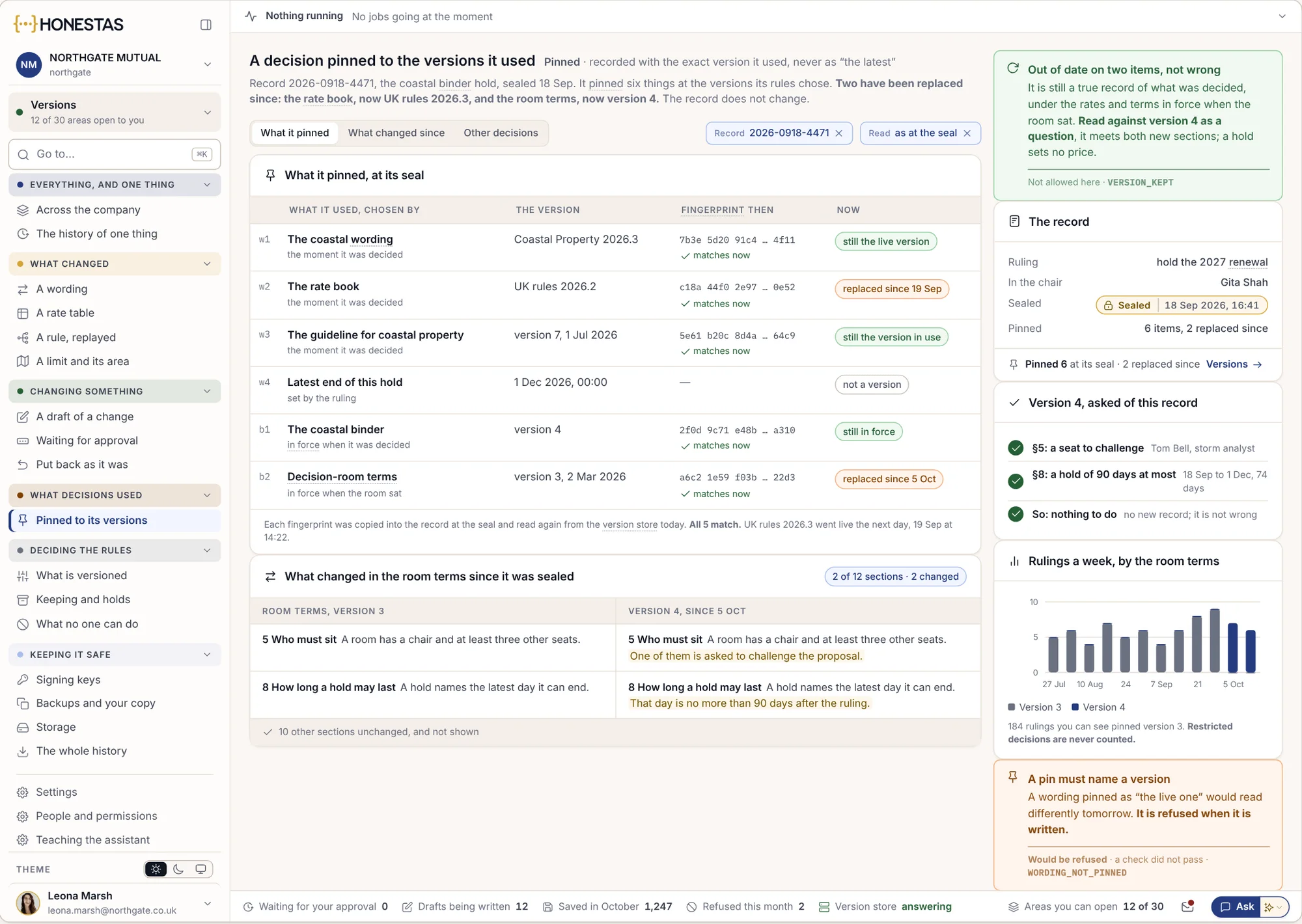
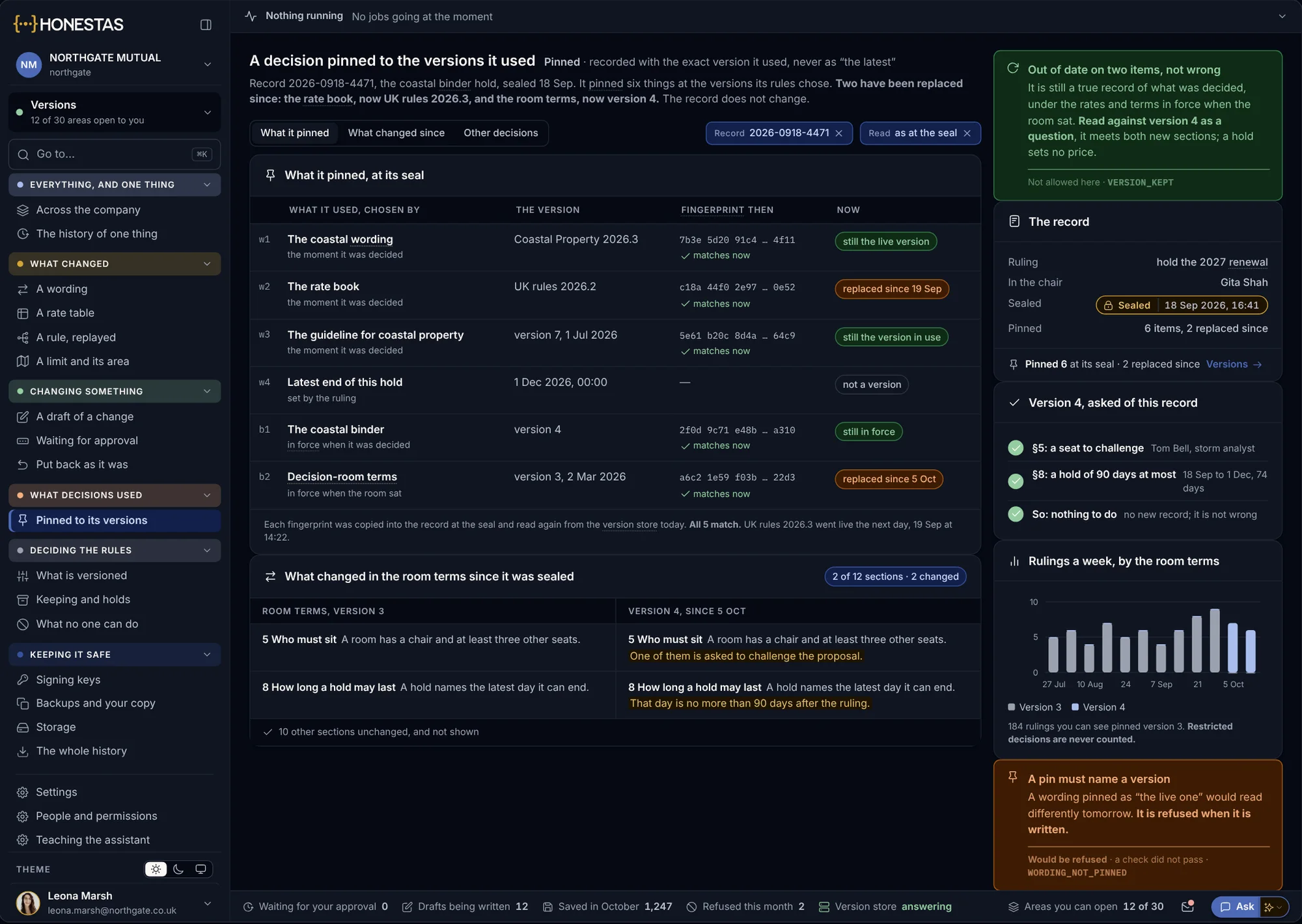
What a decision used
A sealed decision keeps the exact wording, rate book and terms it used. When one is replaced, the record says so, and what it decided does not change.
- Each version pinned by its fingerprint
- Replaced versions marked
- Read again against the new version as a question
See the mix move while you can still act.
These are the measures a chief underwriting officer or chief actuary tracks, read from the sealed pricing, underwriting, reserving and claims decisions themselves.
- Loss ratio
- Gross loss ratio by line, segment and channel, by accident year and by calendar year.
- Claim mix
- The share of claim cost by type, such as damage against injury, and how fast it is moving.
- Rate adequacy
- The rate change achieved against the change you priced for.
- Outside appetite
- Quotes referred or bound outside appetite, and who signed each one.
- Reserve movements
- Each reserve change with its reason, and how much of the result comes from prior-year releases.
- Renewal checks
- Renewal prices held because they were above the ceiling the pricing rules set.
- Replaced versions
- Decisions still resting on a rate table or wording that has since been replaced.
Pricing and reserving, in practice.
Does HONESTAS set our prices?
No. Your actuaries, models and rating engine set prices. HONESTAS shows what each change moves, routes it to the person who may approve it and seals the decision with its evidence.
How does appetite get into the room?
Underwriting writes appetite, capacity and authority limits as rules. Each rule is versioned, and a change to it is approved like any other decision.
Does it read our rating engine and policy system?
Yes. It reads rate tables, quotes and policies from Guidewire PolicyCenter, Duck Creek, Sapiens or your own systems, as they are. Nothing is migrated.
What about reserving?
Reserve changes and the assumptions behind them are argued and signed in a room, and pinned to the table versions they used. The actuarial function can reopen any of them later.
Go deeper
Bring one rate change you made last year.
We will show you what it moved, who would have signed it and what HONESTAS would have kept.