

A claim waits longest where nobody is sure who may decide it.
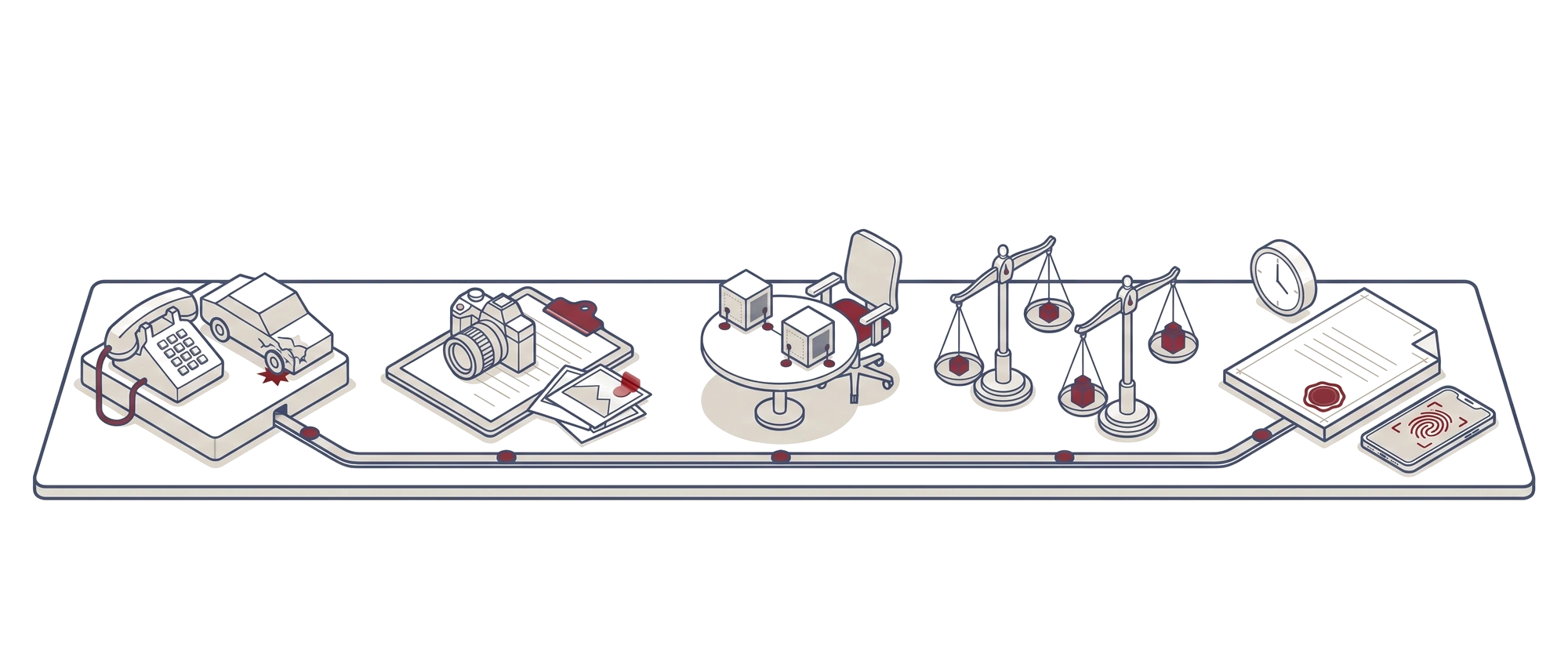
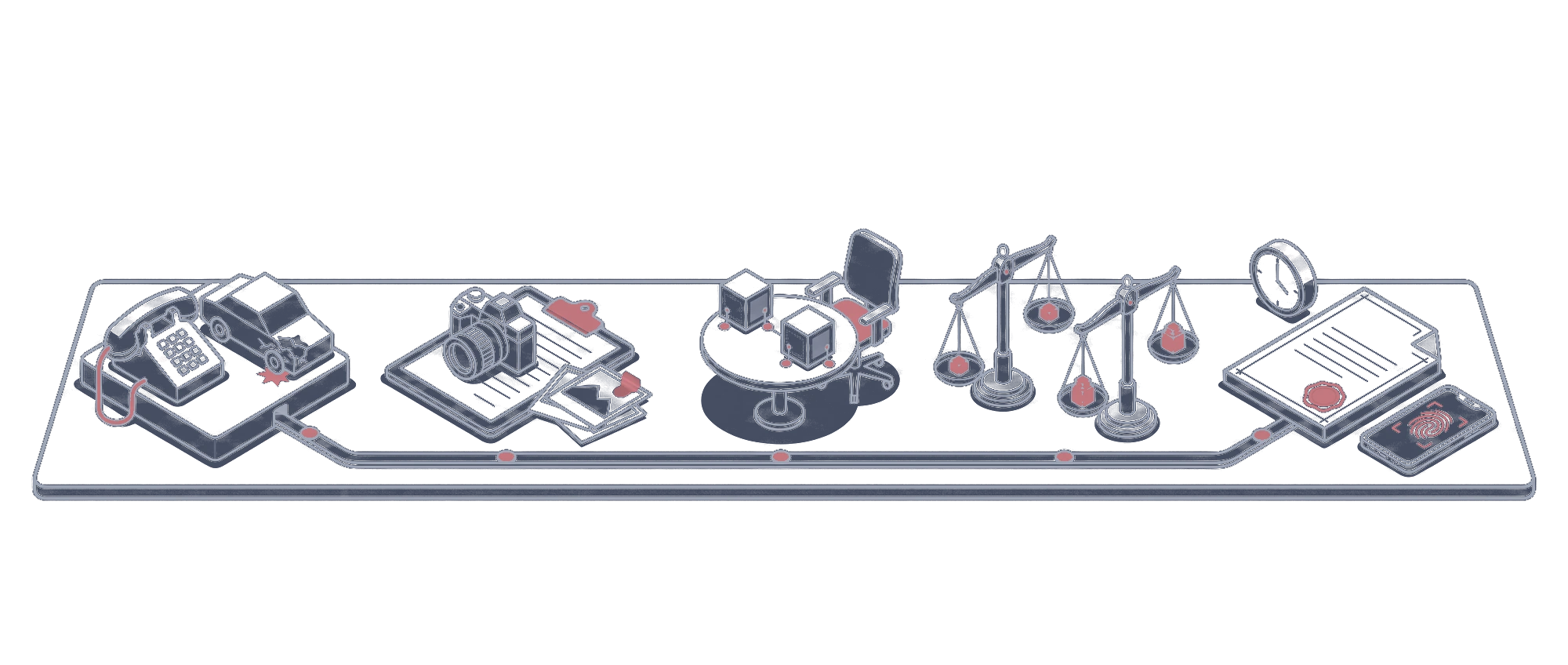
HONESTAS sends each claim to a chair with the authority to decide it on the day it arrives. What is already clear is paid on account. What is in dispute is argued in a decision room. The settlement is signed by a named person and sealed with its reasons.
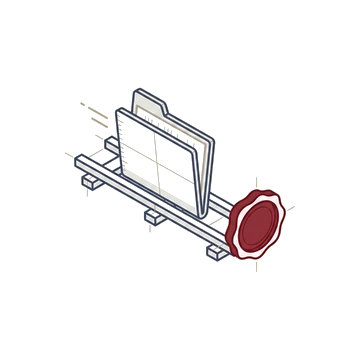
Damage claims settle in months. Injury claims take years.
The longer a claim runs, the more of its cost goes to the process instead of the customer. Much of the wait is not the work itself. It is a file sitting still while people find out who may decide it, and what they need first.
Source: Central Bank of Ireland, National Claims Information Database, Private Motor Insurance Report 8, published 20 October 2026. Settlement year 2025.
Settle who decides first. Then pay what is clear.
The same four steps run on every claim that AI touches, from a cracked windscreen to a commercial property loss.
Triage to the right chair
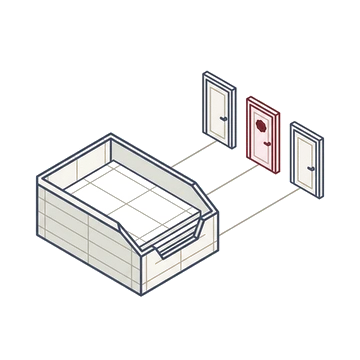
At first notice of loss, triage reads the claim, the cover and the likely amount, and sends it to a room whose chair holds enough authority to decide it. No file waits to be passed up later.
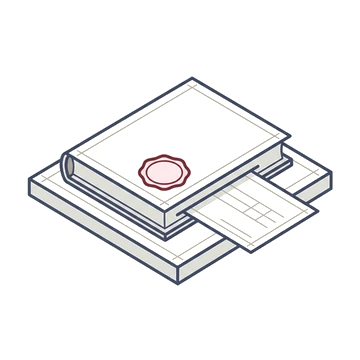
Pay what is clear, on account
The part nobody disputes is paid now, as a payment on account with its own reason. Above your limit, a second person must agree before the money moves.
Argue the rest in the room
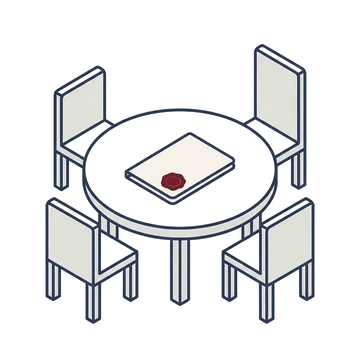
AI seats make the case for and against, a challenger attacks the answer and a second, independent model works it out again. The chair rules on what is left.

Settle and seal
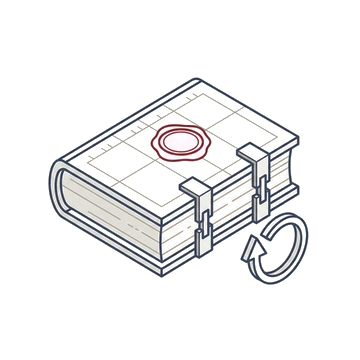
A named handler or claims lead signs the settlement. The whole thread is sealed, and the customer is told in plain words what has been paid and what is still open.
The claim, the money and who may sign for it.
These are HONESTAS screens, shown with sample data from Northgate Mutual, a sample organisation.
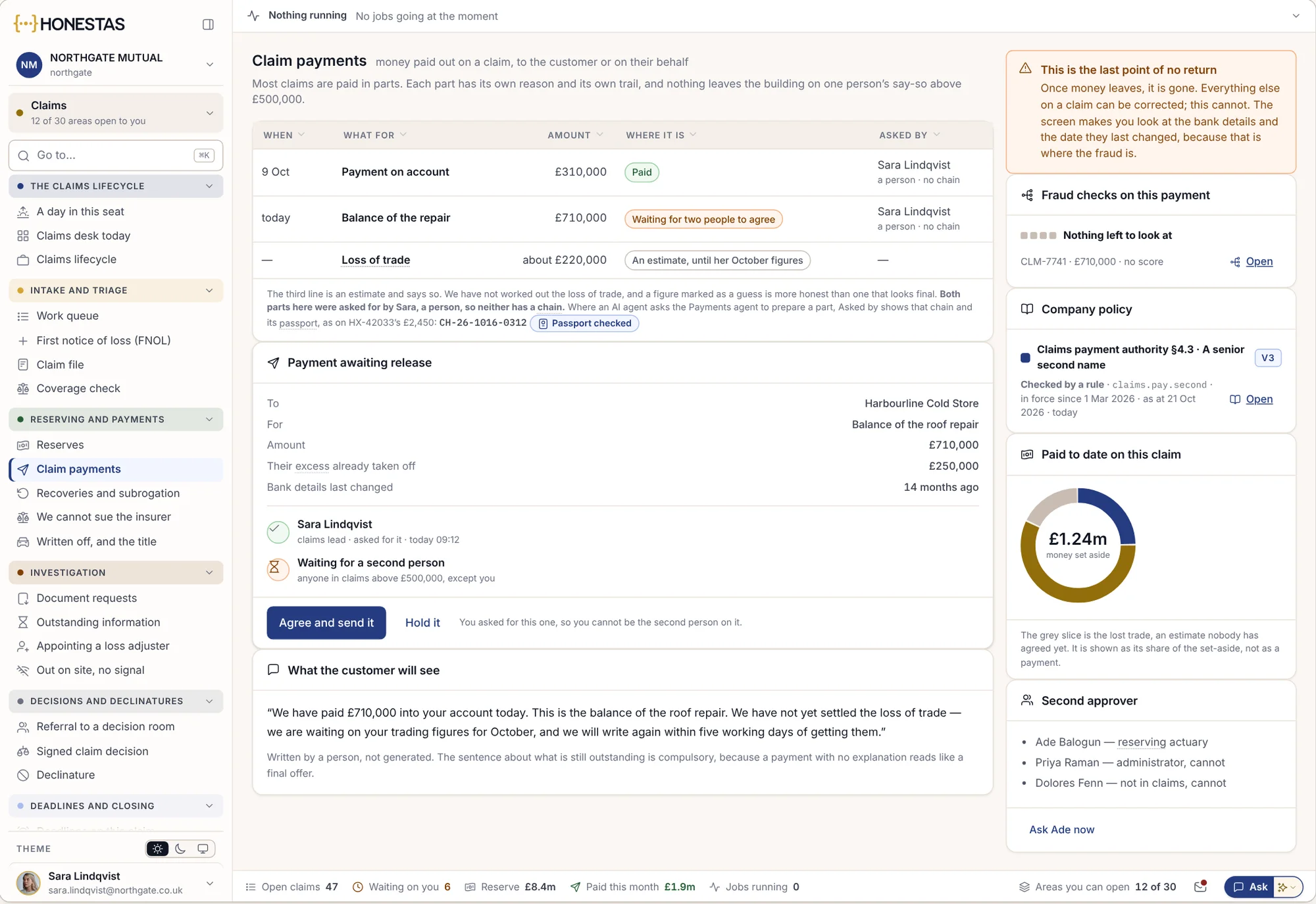
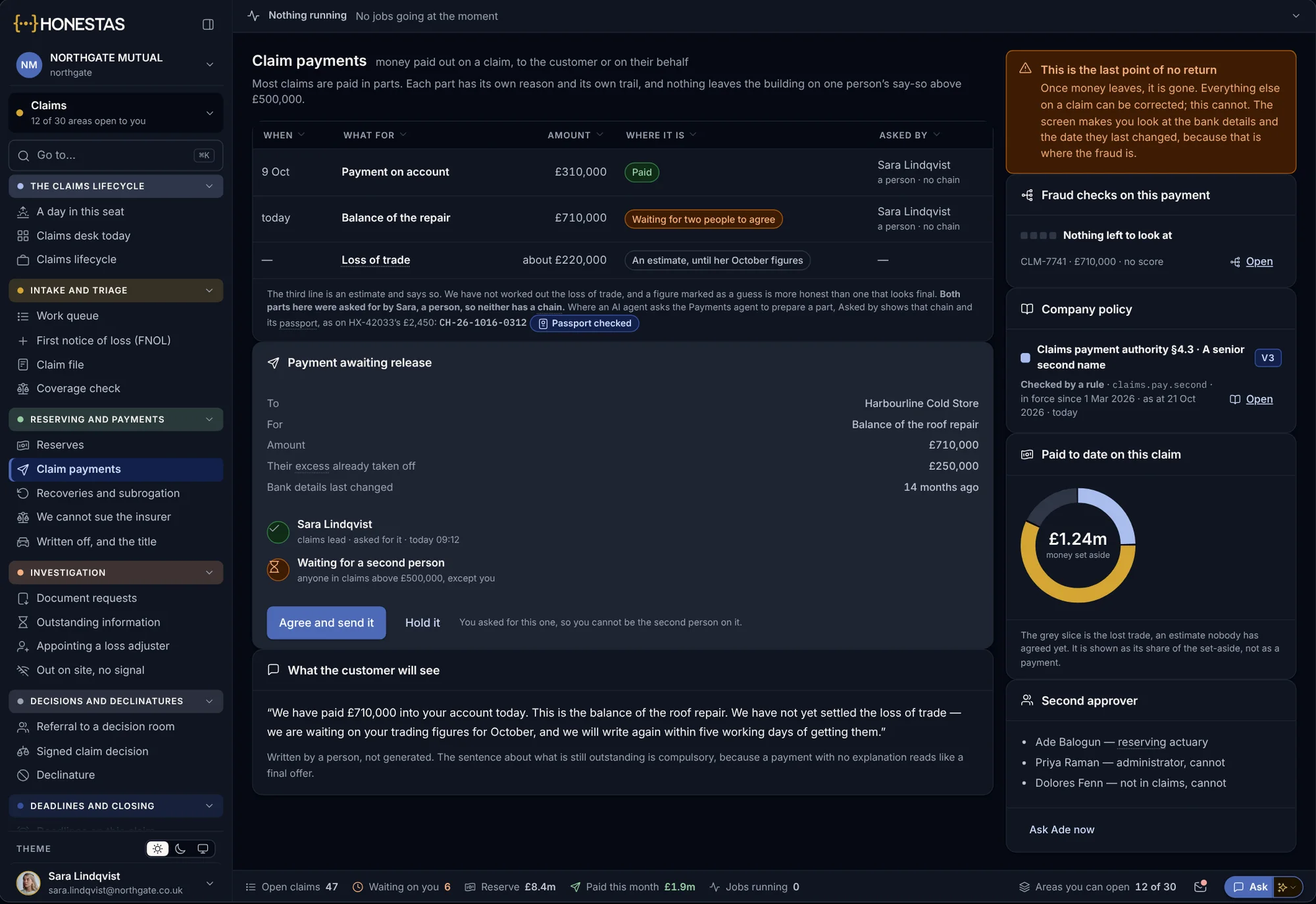
Money out of the door, one part at a time
Each part of a payment has its own reason and its own trail. The last check before money leaves is the bank details, because that is where payment fraud hides.
- A payment on account already paid
- The balance waits for a second person
- The customer's letter says what is still open
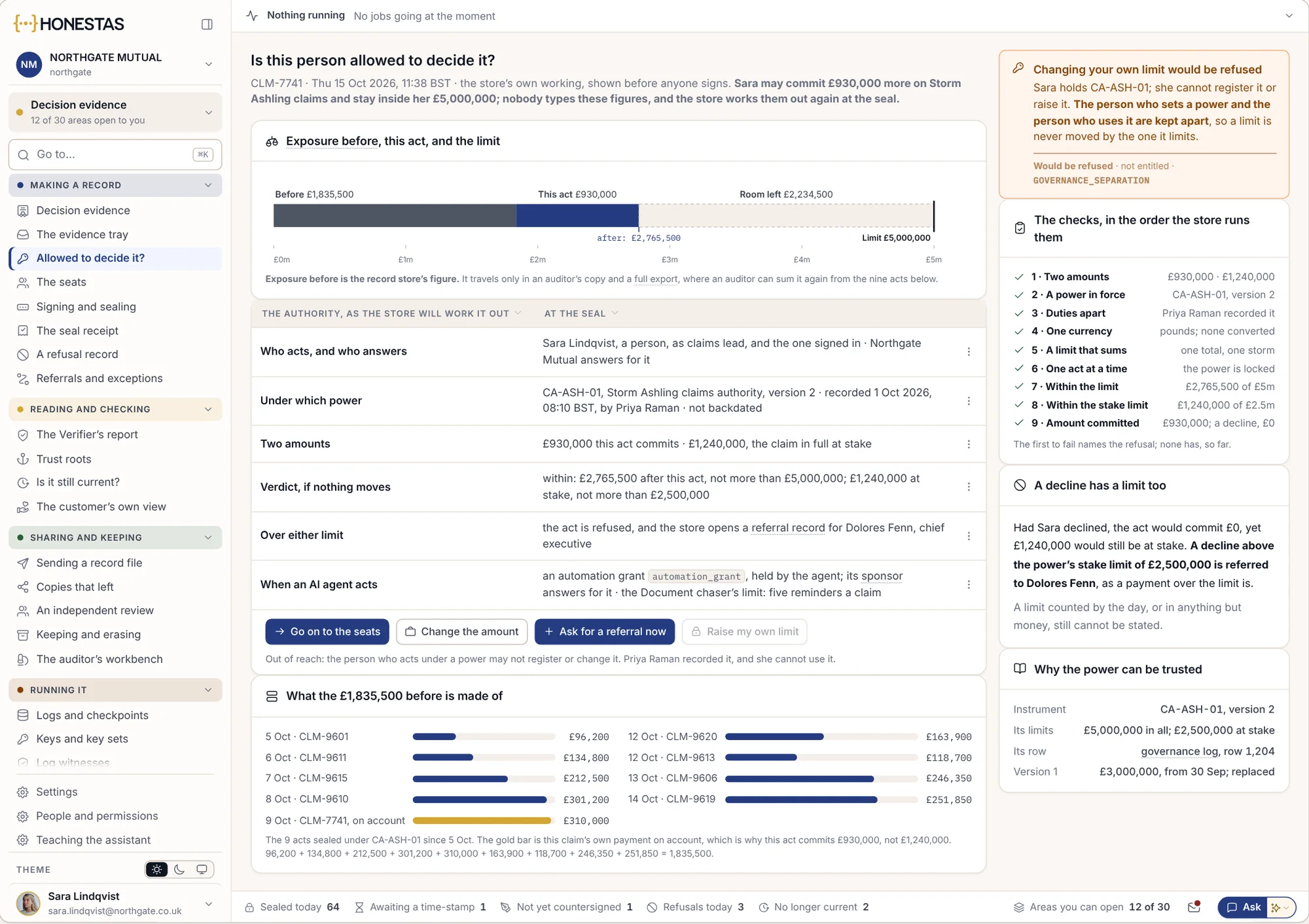
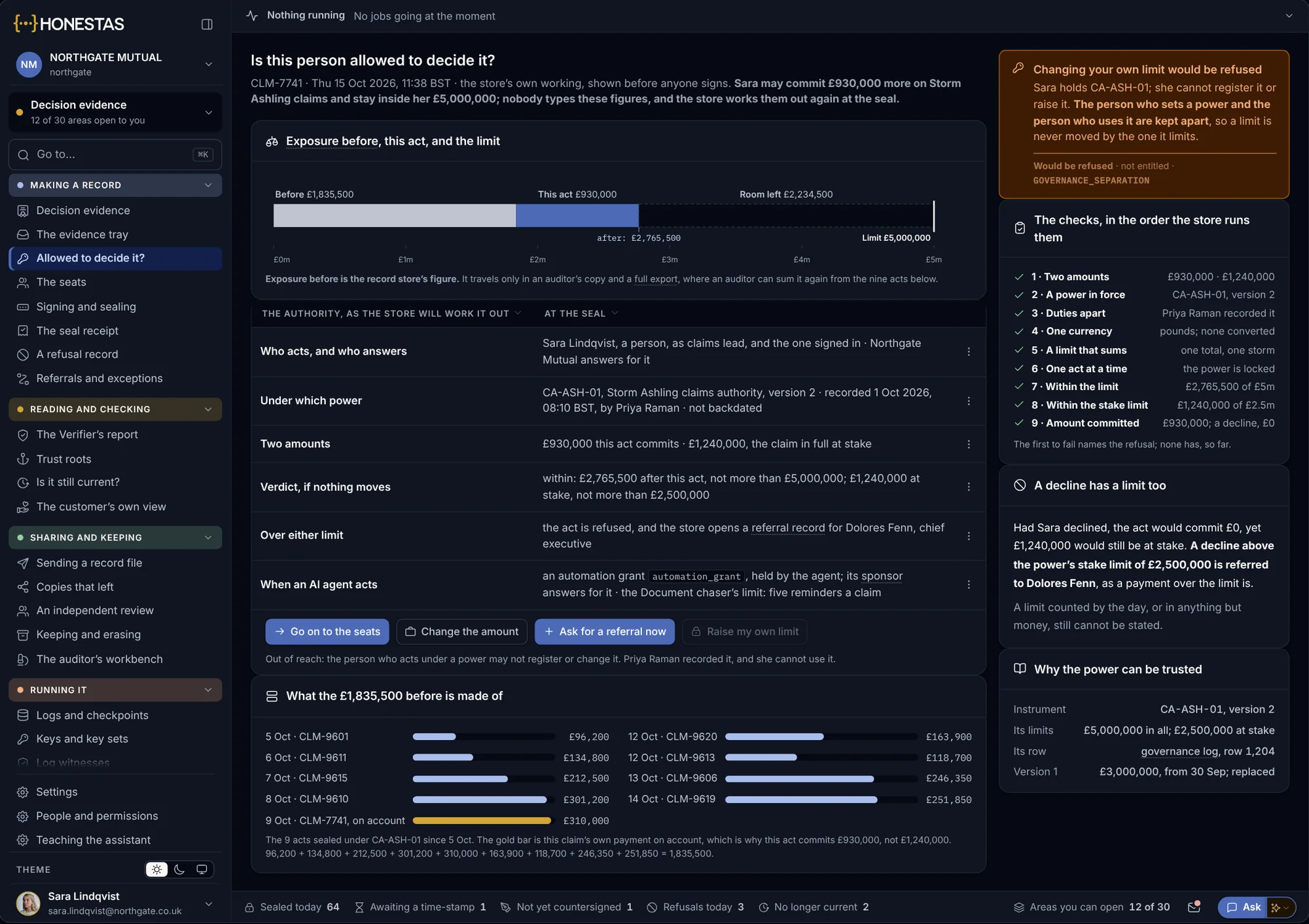
Checked before anyone signs
HONESTAS works out the signer's authority from the power she holds, what she has already committed and the limit, before she signs. A decision outside her authority cannot be sealed.
- Every check shown in order
- Over the limit, a referral opens
- Nobody can raise their own limit
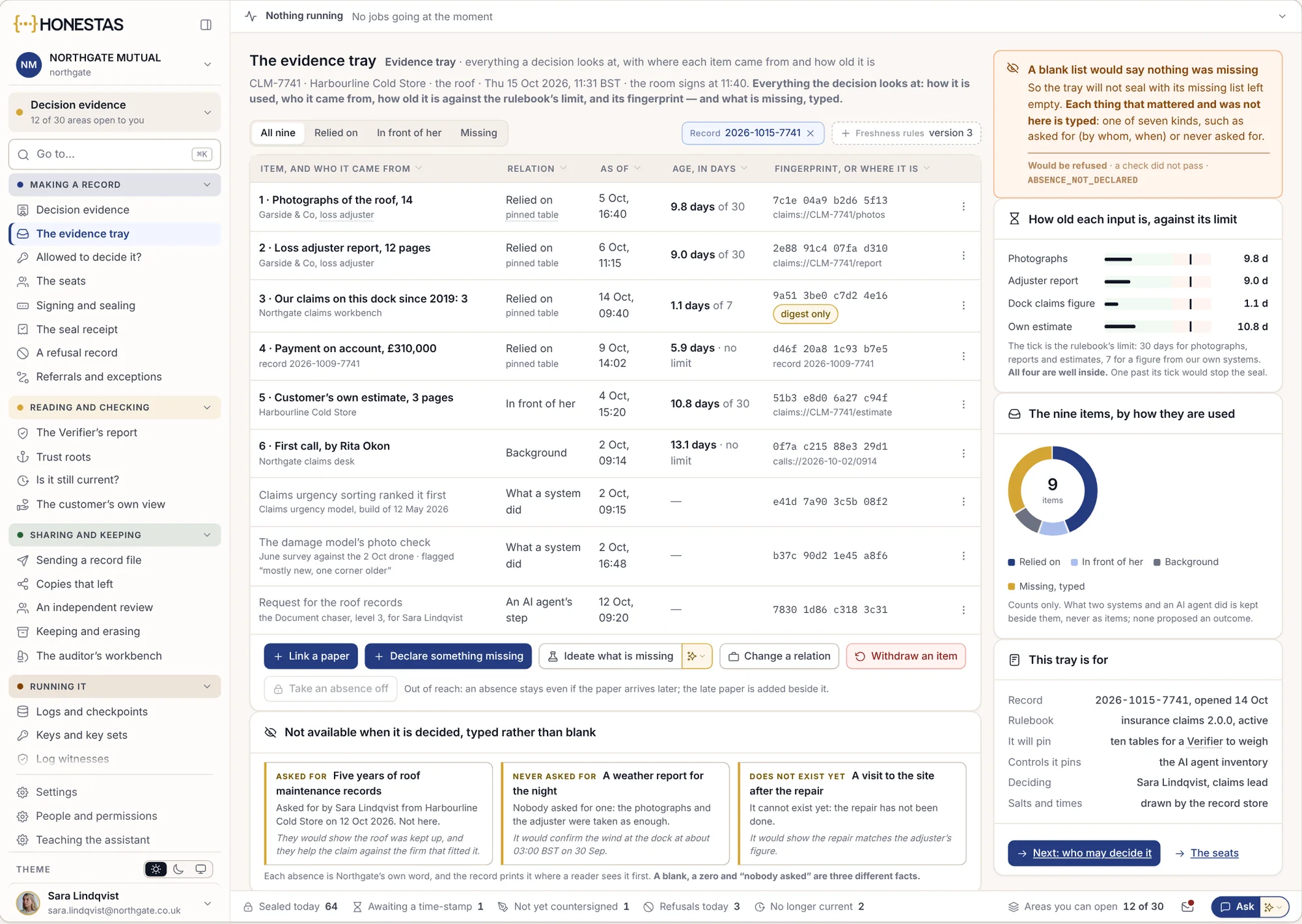
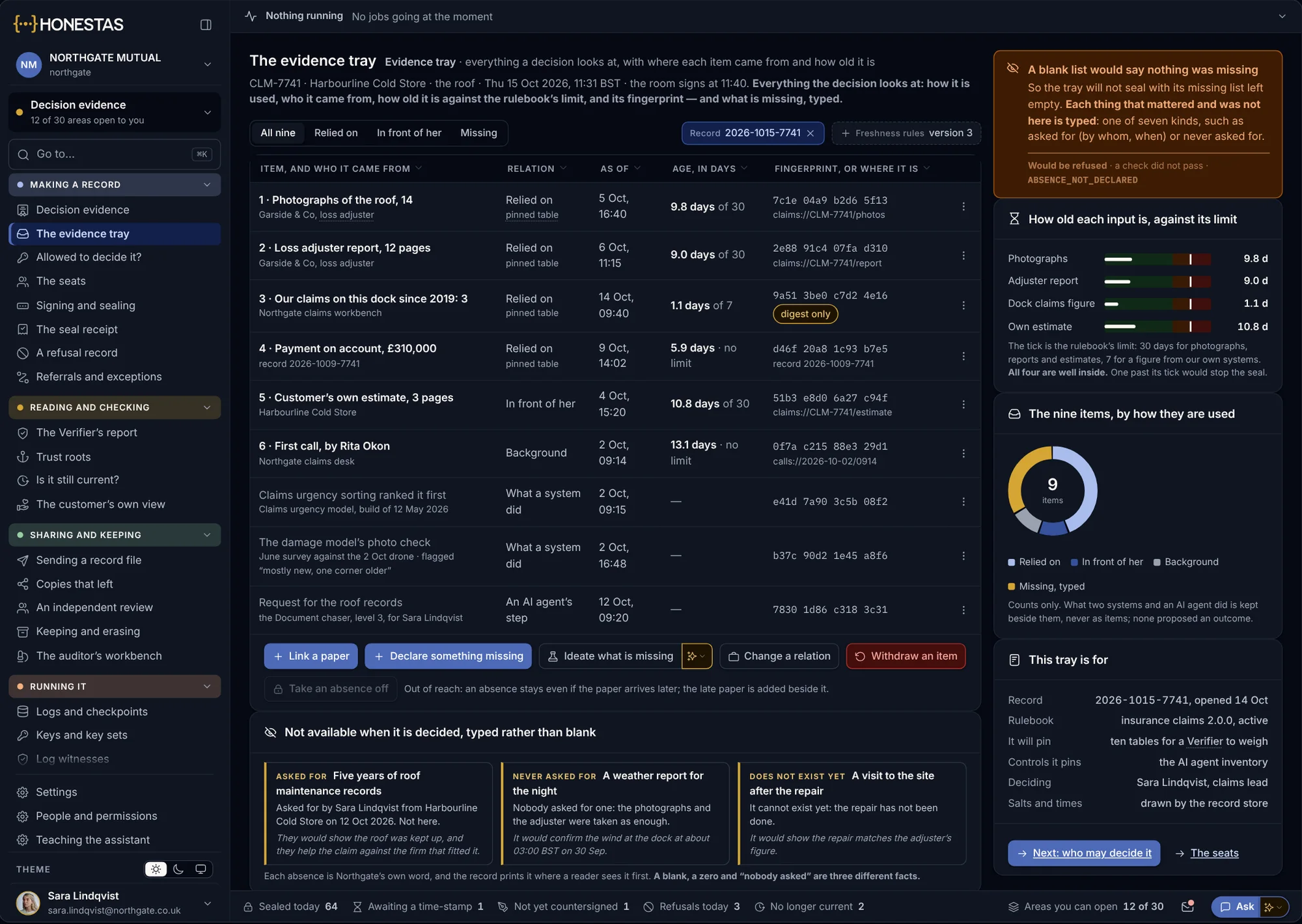
What the decision looks at
Every item the decision rests on, where it came from and how old it is against its limit. Anything missing is named, so a blank never passes for nothing missing.
- Photos, adjuster's report, payments
- Age of each item against its limit
- Missing papers named, with who owes them
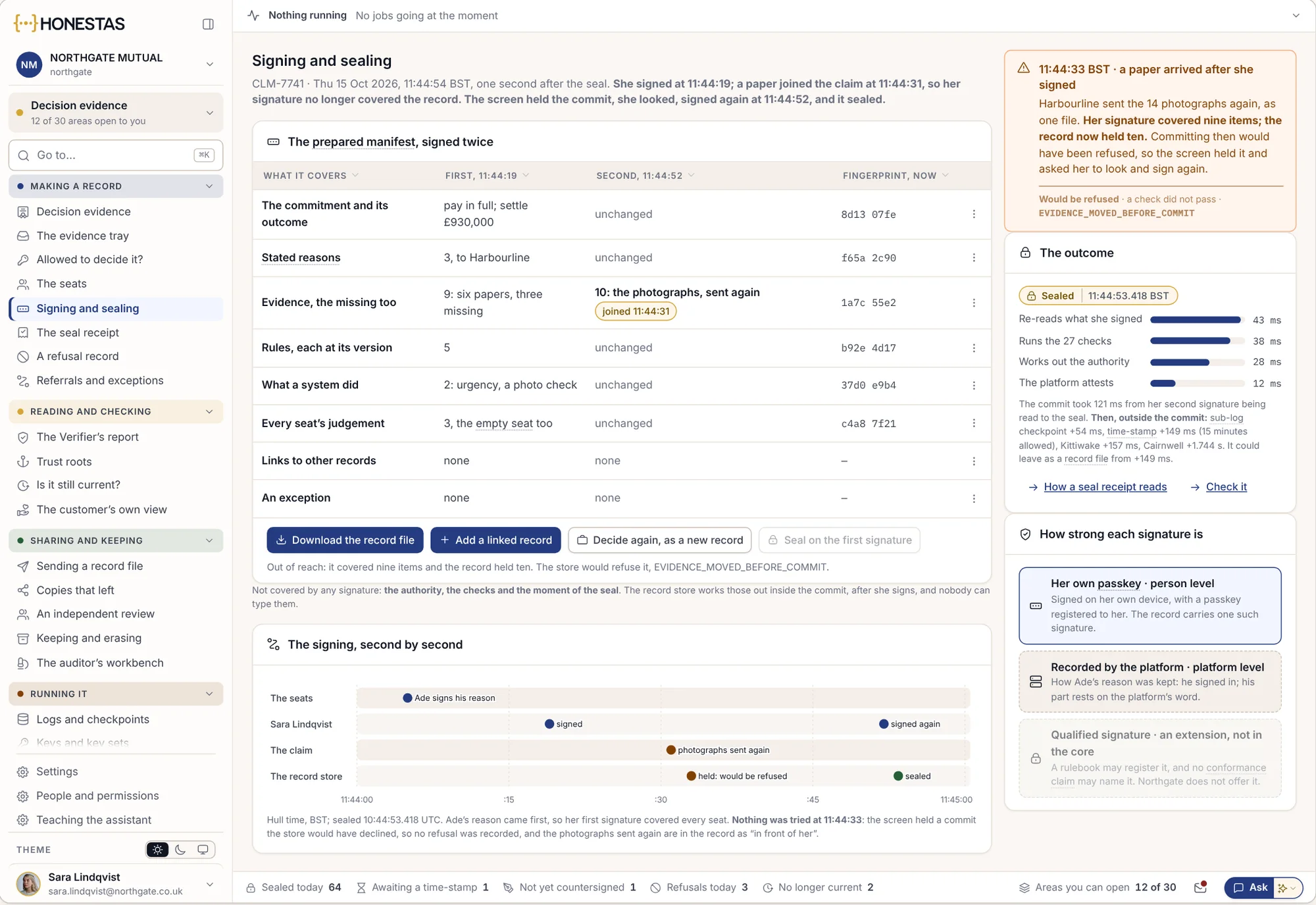
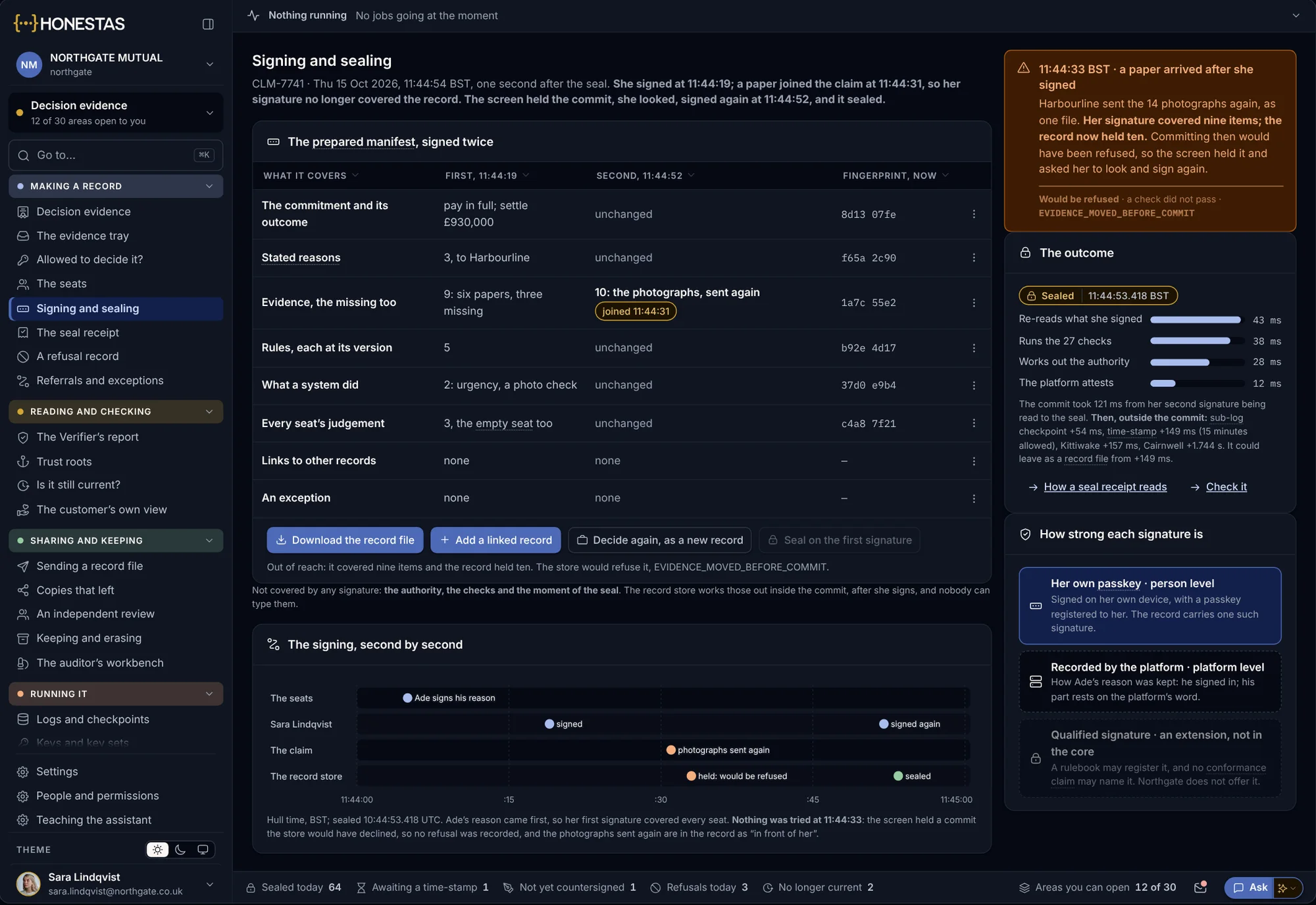
One signature for the whole file
The signature covers every paper in the record. If a paper arrives after she signs, the seal waits and she is asked to look again.
- Signed with her own passkey
- Sealed with an outside time stamp
- A late paper means a second look
Measure the wait, from the records themselves.
Every step of a claim leaves a sealed, timed record. These are the measures a head of claims tracks, read straight from those records rather than from a survey.
- To the right chair
- Hours from first notice of loss until a chair with enough authority holds the claim.
- First payment
- Days from first notice to the first payment on account.
- Hand-offs
- How many times a claim changes desk or chair before it settles.
- Waiting on a decision
- Days a claim sits with nothing to do except wait for someone to decide.
- Referrals
- Claims sent up because the handler could not sign, and how long each one waited.
- Settlement channel
- The share of injury claims settled directly, through the Injuries Resolution Board or in litigation.
- Reopened
- Settlements reopened after a complaint or an ombudsman finding.
Faster claims, in practice.
Do we have to replace our claims system?
No. HONESTAS reads from Guidewire ClaimCenter, Duck Creek Claims or your own system as they are. Reserves and payments go back through a checked, recorded step, never a direct update.
Who decides a claim?
A named person with the authority to decide it. AI seats argue for and against, and a second model checks the answer, but nobody is refused a claim by a model alone.
Can we pay part of a claim before the rest is settled?
Yes. Each payment on account carries its own reason and trail. Above the limit you set, a second person must agree before the money moves.
What does the customer see?
A letter or message, approved by a person, that says what has been paid, what is still open and what happens next. A payment with no explanation reads like a final offer, so the explanation is required.
Does it work for a claims administrator handling many insurers?
Yes. Each insurer keeps its own authorities, rules and sealed records, and the handler sees which insurer's rules apply to each claim.
Go deeper
Bring the claim that waited longest.
Bring one claim type, such as motor damage or escape of water. We will show you who would chair it, what would be paid on account and how it is sealed.