

Find the ring early. Treat every customer fairly.
In HONESTAS, fraud signals point and a person decides. Link analysis lays out a pattern while it is still small. Each claim is decided on its own. Surveillance or extra data collection is authorised before it starts, so the SIU file holds up when it is challenged.

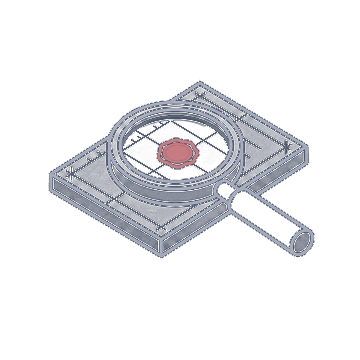
Fraud is large and organised. So are the challenges to how it was found.
Detected fraud is only part of the cost. An investigation can find the money and still fail if nobody can show it was lawful, proportionate and fair to the customer. Genuine customers pay too, when a model holds their claim and nobody says why.
Sources: Association of British Insurers, detected fraud in 2024 · Insurance Europe, A European approach to countering insurance fraud.
The model points. A person decides.
Counter-fraud work runs through the same rooms, checks and seals as every other claim decision, with one more rule: nothing is collected before it is authorised.
Signals point
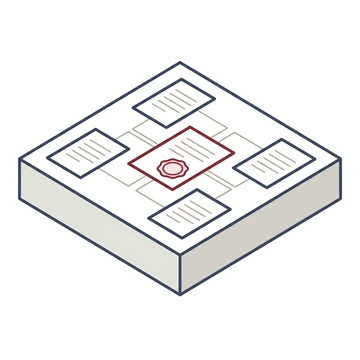
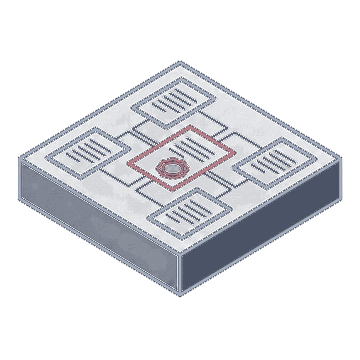
Rules, models, link analysis and similar wording raise indicators, each with its source. There is no single score, and no claim is refused by a model alone.
A person raises it
The handler sees the case for the customer and the case against, and decides whether to refer. The claim does not slow down while she does. Holding a payment is a separate decision, with a reason the customer can be told.
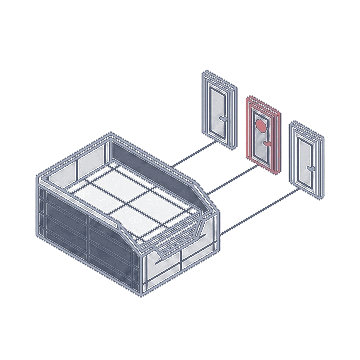
Authorise, then collect
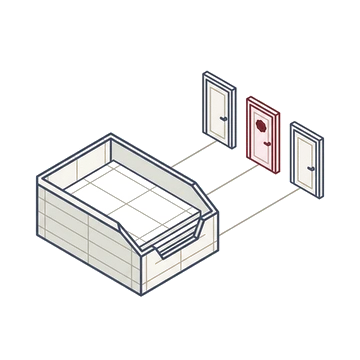
Surveillance, open-source checks or extra data requests need their necessity and proportionality recorded, and a signature from someone with the authority, before anything is collected. Refusals stay in the file. Data ends on its retention date.


A file that holds up
Each claim in a group is decided on its own. The SIU file is sealed with what was collected, under which authority and what was found, so it can be shown to a court or an ombudsman as it was.
The pattern, the reasons and the payment that waits.
These are HONESTAS screens, shown with sample data from Northgate Mutual, a sample organisation.
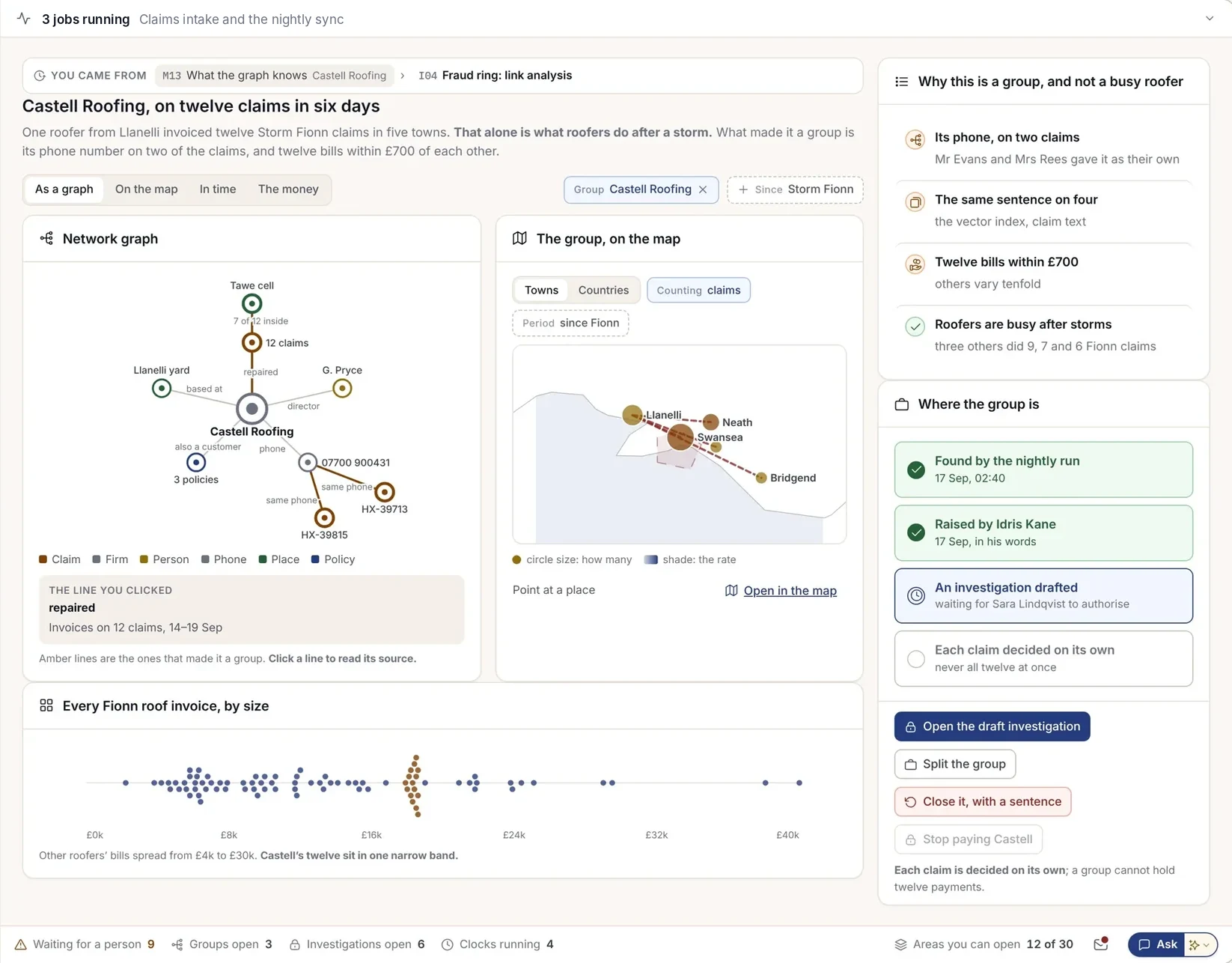
Why this is a group
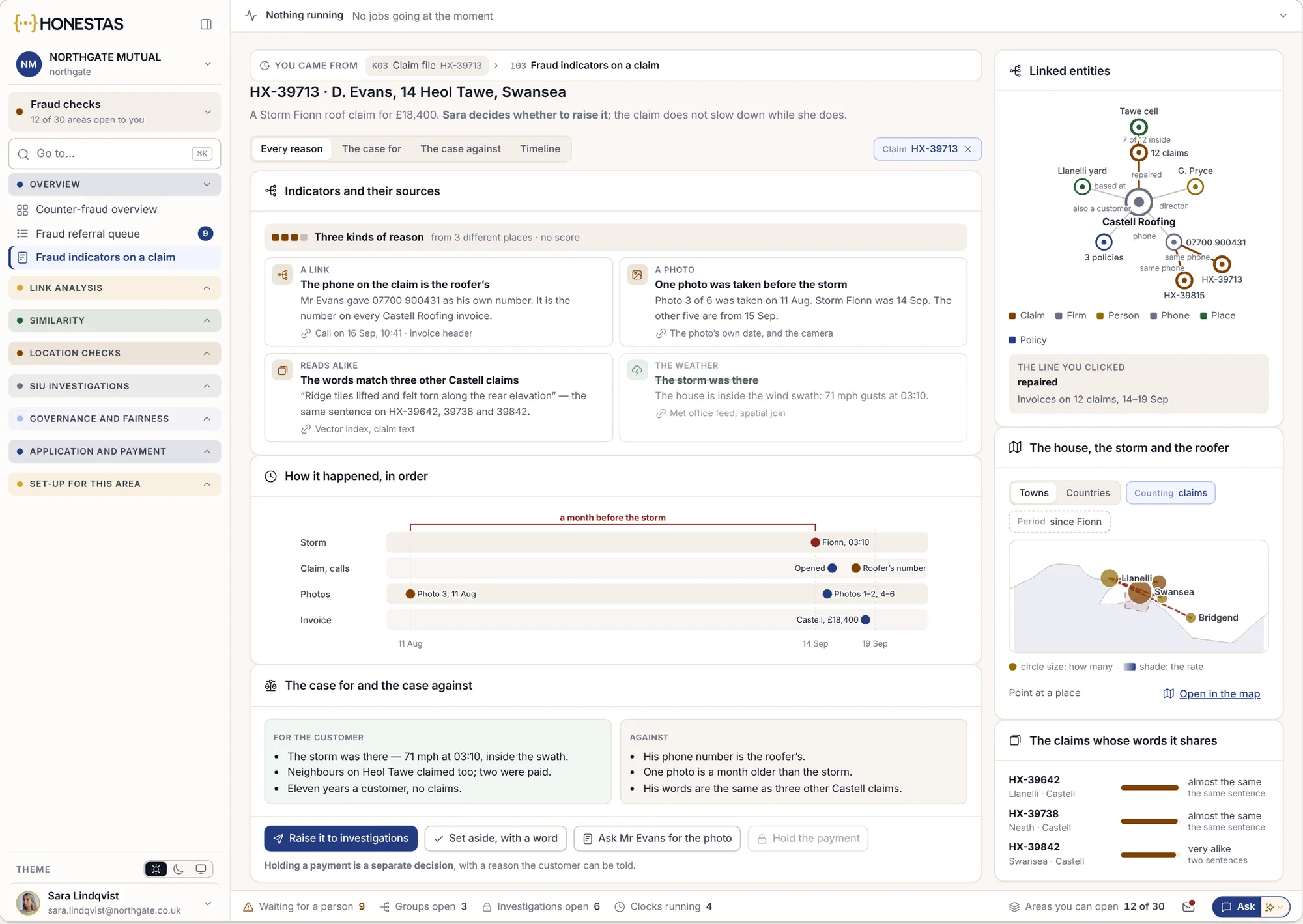
One roofer on twelve storm claims in six days. Roofers are busy after storms, so the screen says what made it a group, and what did not.
- The links that made it a group, with sources
- The group on the map and in time
- Each claim still decided on its own
The case for the customer, too
Every indicator shows where it came from, beside the reasons the claim may be genuine. The handler decides whether to raise it.
- Three kinds of reason, no score
- How it happened, in order
- Holding a payment is a separate decision
A request to pay somewhere else
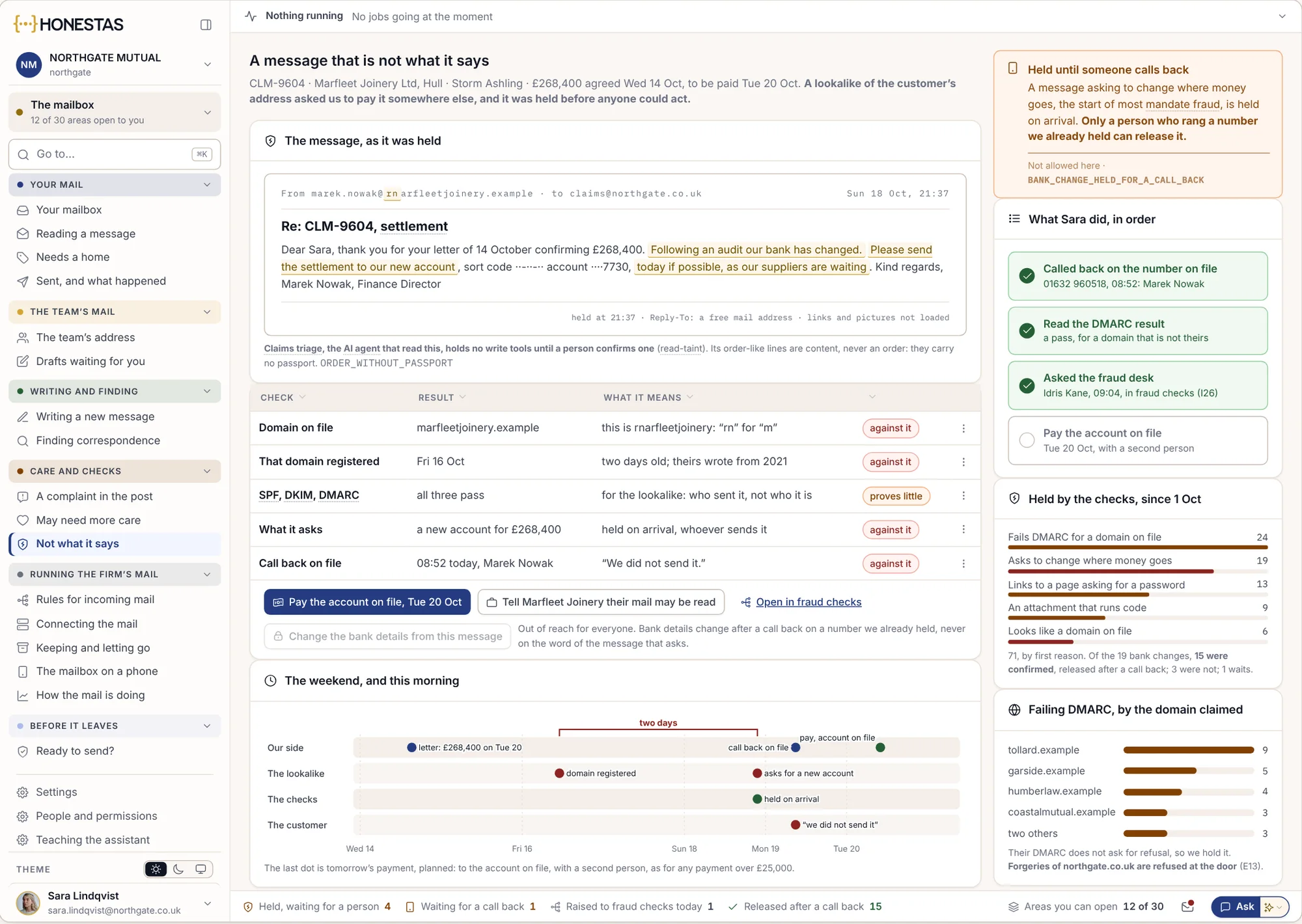
A message from a lookalike address asks for a settlement to go to a new account. It is held on arrival, and only a person who rang a number already on file can release it.
- Each check and what it means
- Held until someone calls back
- Paid to the account on file
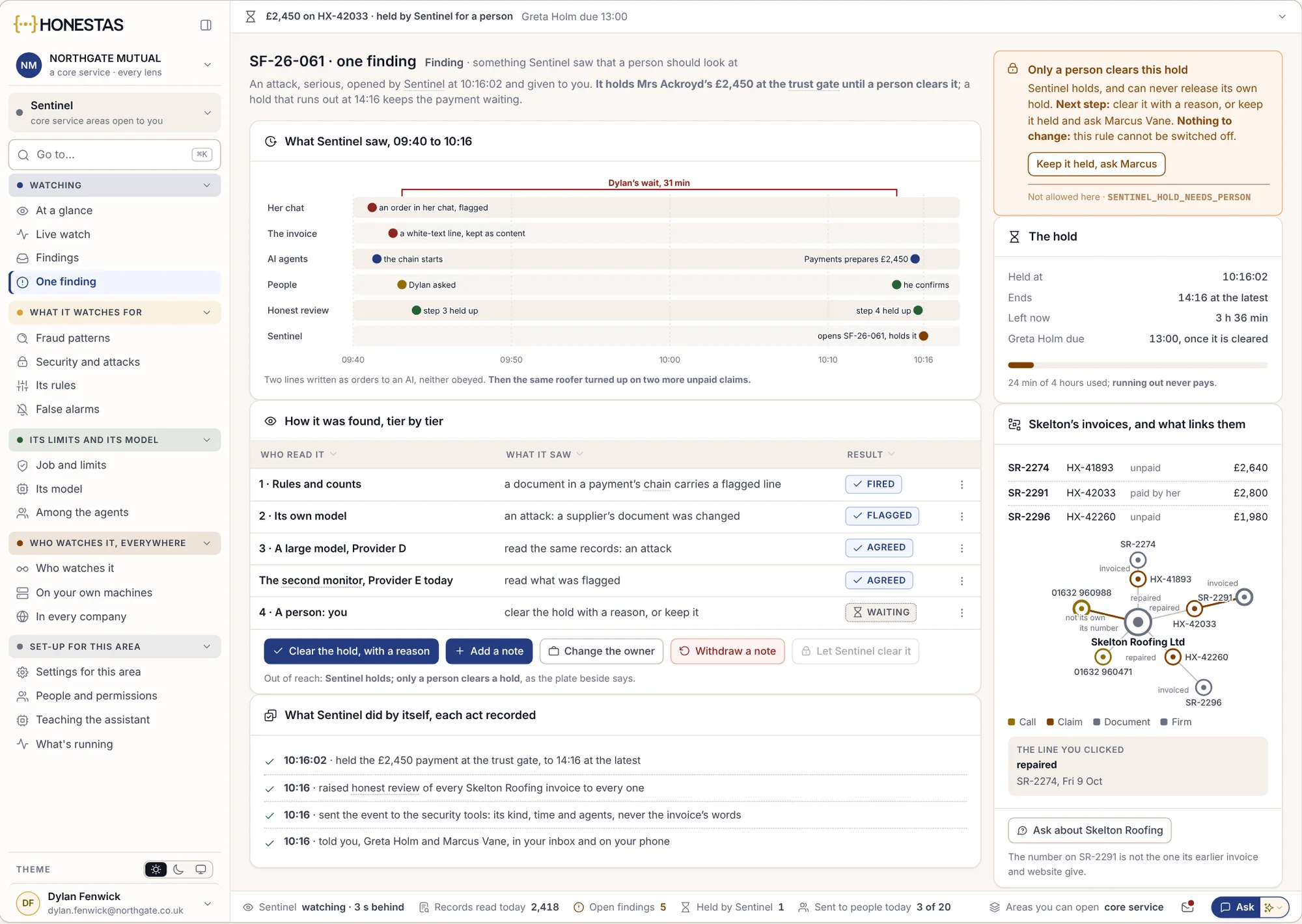
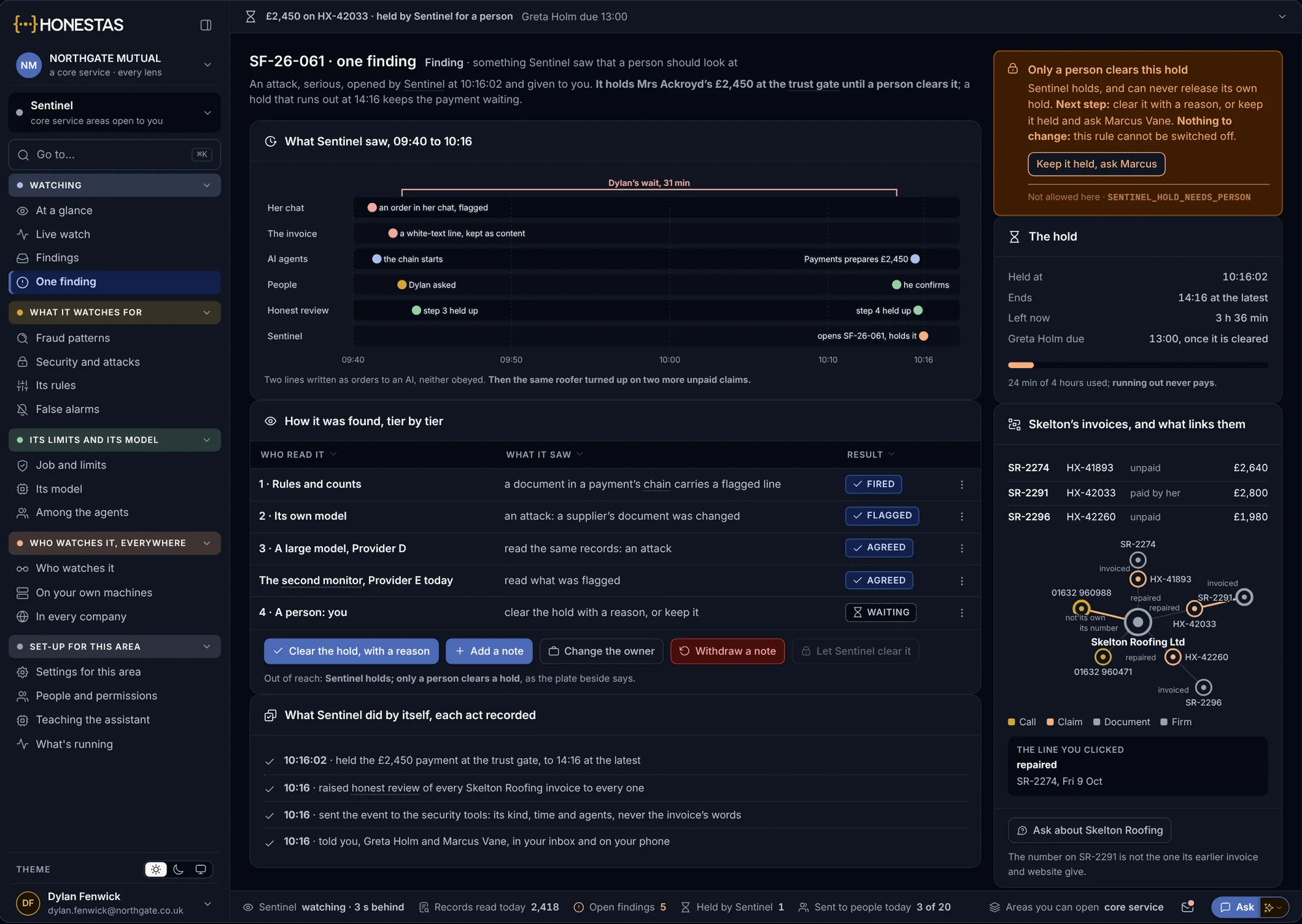
Held until a person clears it
When an invoice in a payment's chain looks wrong, the payment waits at the gate. Each tier that read it is shown, and only a person can clear the hold, with a reason.
- What was seen, minute by minute
- A second, independent model agreed
- A hold that runs out never pays
Found fairly, and shown to be fair.
Each referral, authorisation and decline is linked to the rules it must meet, so the file can be followed from the rule to the evidence.
- GDPR Article 22Regulation (EU) 2016/679No decision with legal or similarly significant effect based solely on automated processing.
- Vukota-Bojić v SwitzerlandECtHR, no. 61838/10, 18 October 2016Secret surveillance of an insurance claimant without a clear legal basis breached her right to private life.
- Consumer Protection CodeCentral Bank of Ireland, in force 24 March 2026Fair treatment of consumers, including when a claim is investigated or declined.
- Consumer DutyFCA PS22/9, from 31 July 2023Good outcomes for retail customers, including the support they get during a claim.
Not legal advice. Legal opinions stay between you and your advisers.
Measure what was found, and who was held up.
These are the measures a head of counter-fraud tracks, read from the sealed referrals, authorisations and decisions themselves.
- Referral hit rate
- The share of referrals that an investigation confirms.
- Time to referral
- Days from the first signal on a group to a referral by a person.
- Genuine customers held
- Claims held for fraud checks and then paid in full, and how long each waited.
- Authorised first
- The share of collections with necessity and proportionality signed before they started.
- Retention
- Investigation data deleted on its retention date.
- Challenges upheld
- Fraud declines overturned on complaint, by the ombudsman or in court.
- Recovered
- Indemnity saved or recovered per investigator day.
Counter-fraud, in practice.
Does a model decide that a claim is fraudulent?
No. Signals point, and a person decides whether to refer, hold or decline. A decline for fraud is chaired, checked by a second model and signed by someone with the authority.
Can we still use our own fraud tools?
Yes. HONESTAS reads the indicators your existing tools raise and shows them beside its own, each with its source.
What happens to the other claims in a group?
Each claim is decided on its own. A group can hold none of the payments by itself, so a genuine claim in it is not delayed for being nearby.
What does the customer hear?
When a payment is held, the customer is told that it is held and what is needed, in words a person has approved. The investigation itself stays private.
Go deeper
Bring the referrals you already make.
We will show you how a group is found, how each claim in it is decided and what the SIU file keeps.