

Connect what you run. Replace nothing.
HONESTAS reads your policy administration, claims, model registries, hazard feeds and directory as they are. It never becomes your system of record. When a decision has to change something, the write-back is checked against the sealed decision and recorded with the answer that came back.
| System | Kind | Writes back |
|---|---|---|
| Guidewire PolicyCenter | Policy | Never |
| Guidewire ClaimCenter | Claims | Reserves and payments, after the seal |
| MLflow | Models | Never |
| Copernicus · NOAA | Hazard | Never |
| Your directory | Identity | Never |
| ACORD · agent links | Partners | Messages, checked at the wall |
Each system is read as it is. Nothing is migrated.
Six kinds of system. One sealed decision.
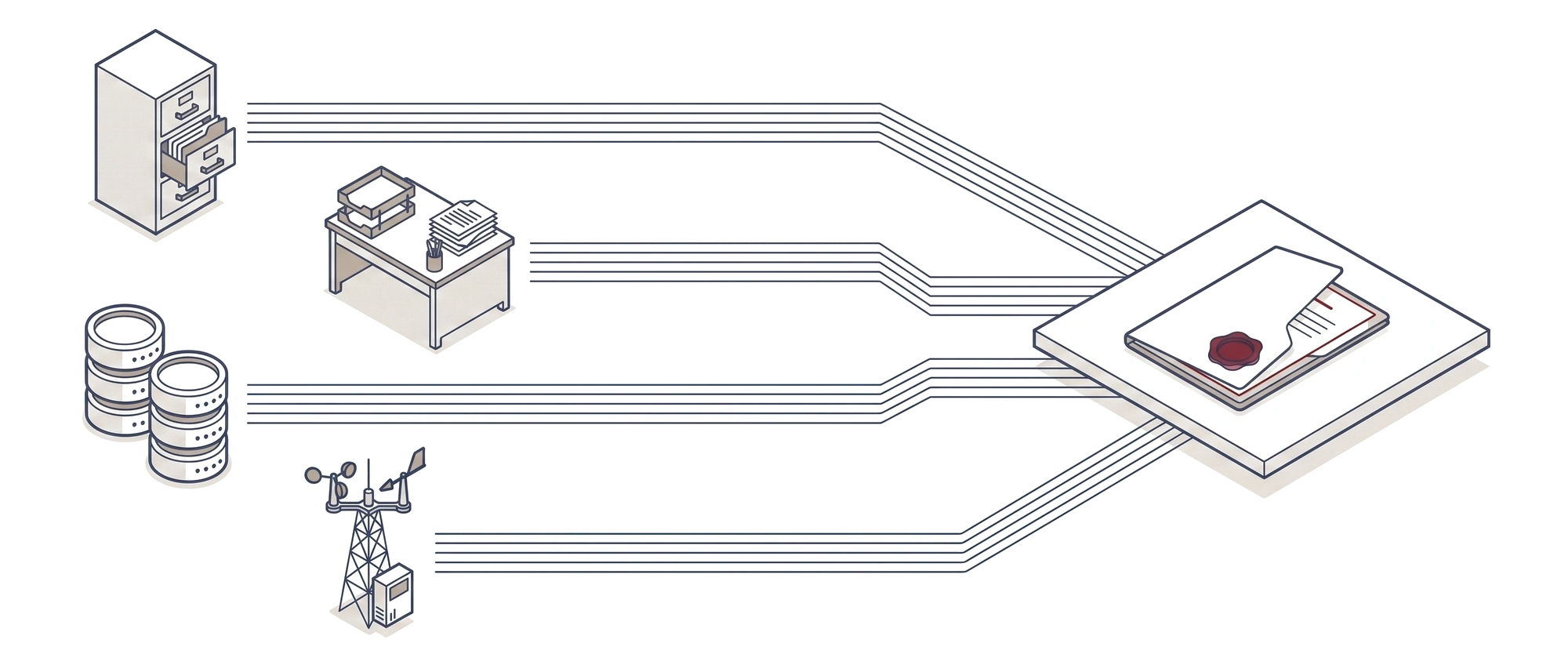
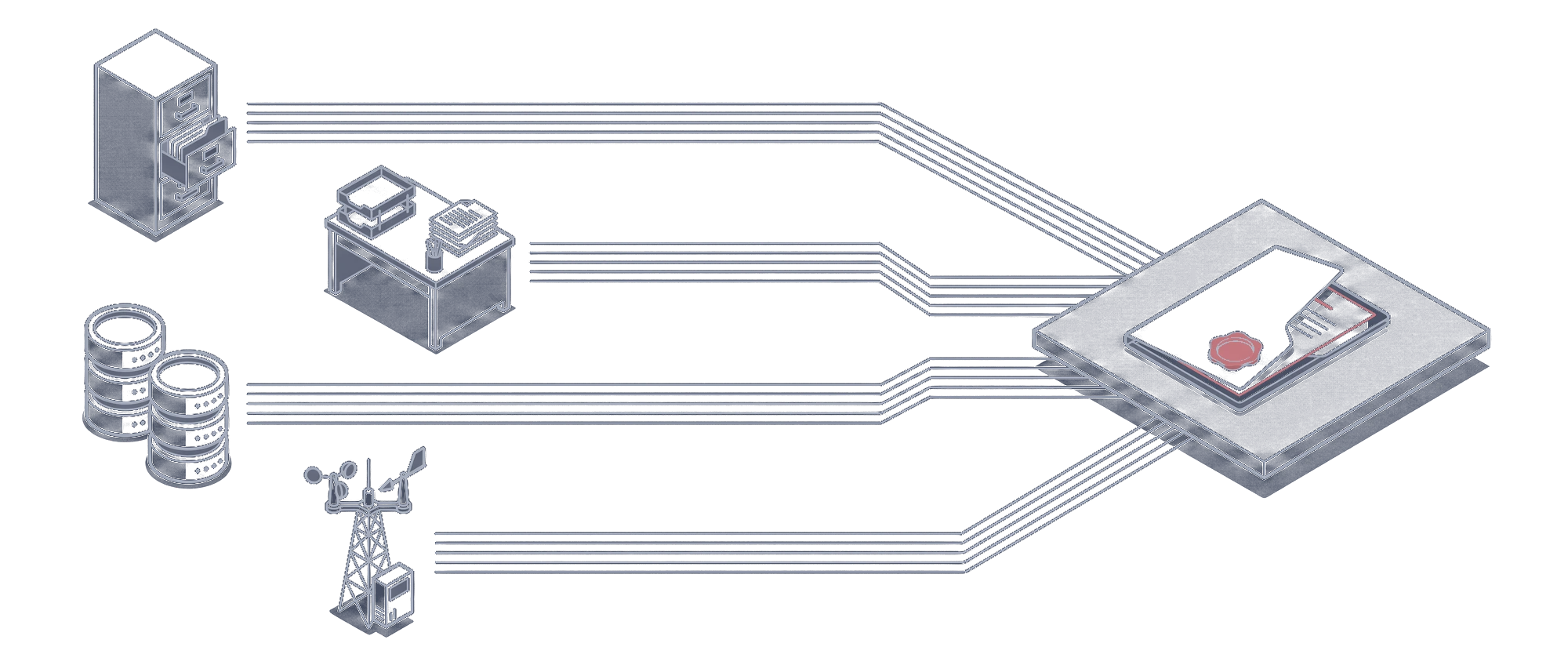
Every decision room reads what it needs from the systems you already run. Each item it reads is kept in the record with where it came from and when.
- Policy administration
Guidewire PolicyCenter, Duck Creek, Sapiens or your own system. Policies, wordings, endorsements and rate tables.
- Claims
Guidewire ClaimCenter, Duck Creek Claims or your own system. Claims, reserves, payments and documents, with every write-back recorded.
- Model registries
MLflow, SageMaker or your own registry and run logs. Every run and version is kept, and drift is caught.
- Hazard and exposure
Copernicus, NOAA, USGS and FIRMS, live, beside your own exposure data in OED or your own format.
- Identity
SAML, OIDC and SCIM, with your own directory deciding who sees what and who holds which authority.
- Partners
ACORD and BiPRO messages, and agent-to-agent links to brokers, coverholders and reinsurers.
Your systems stay the system of record.
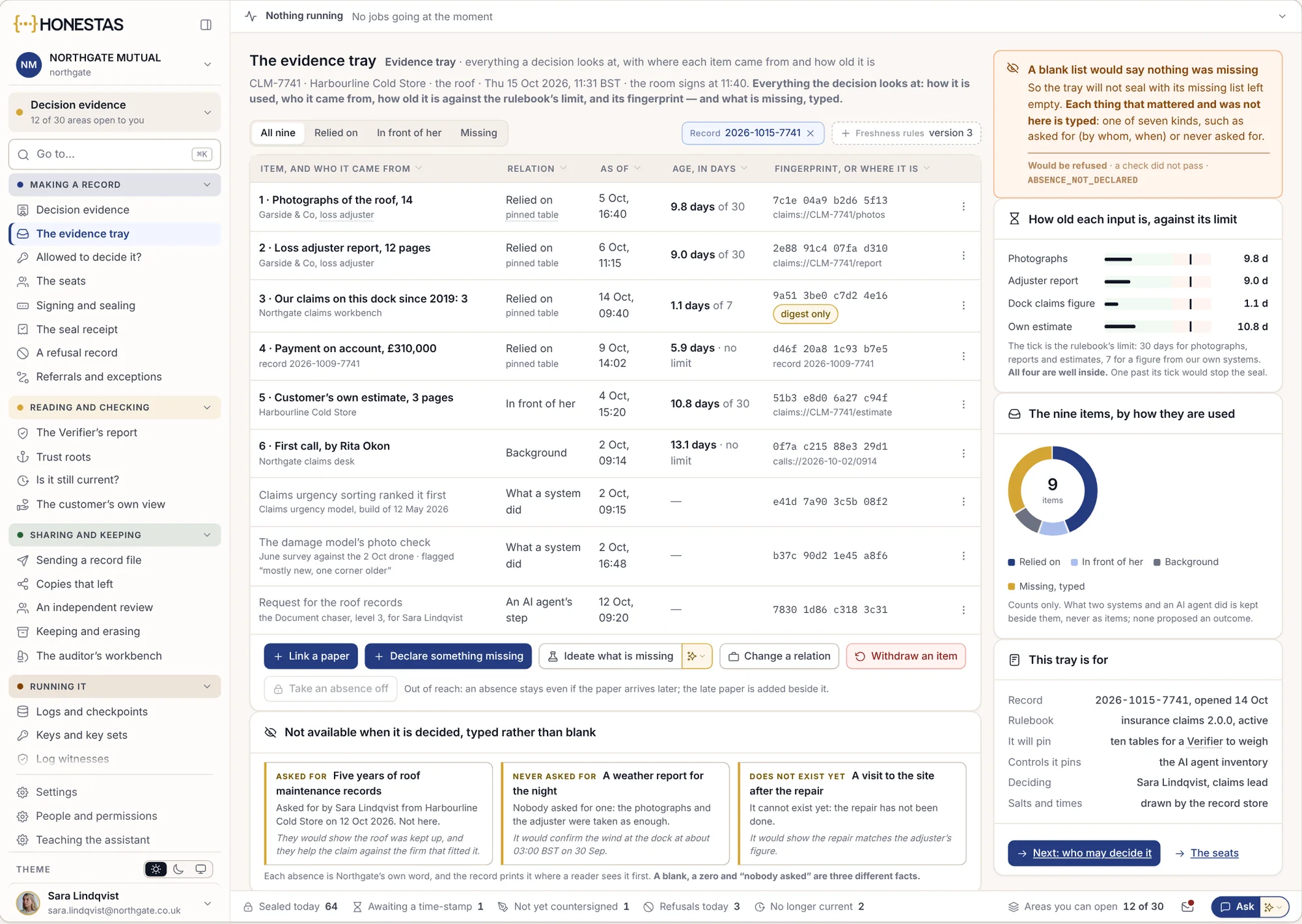
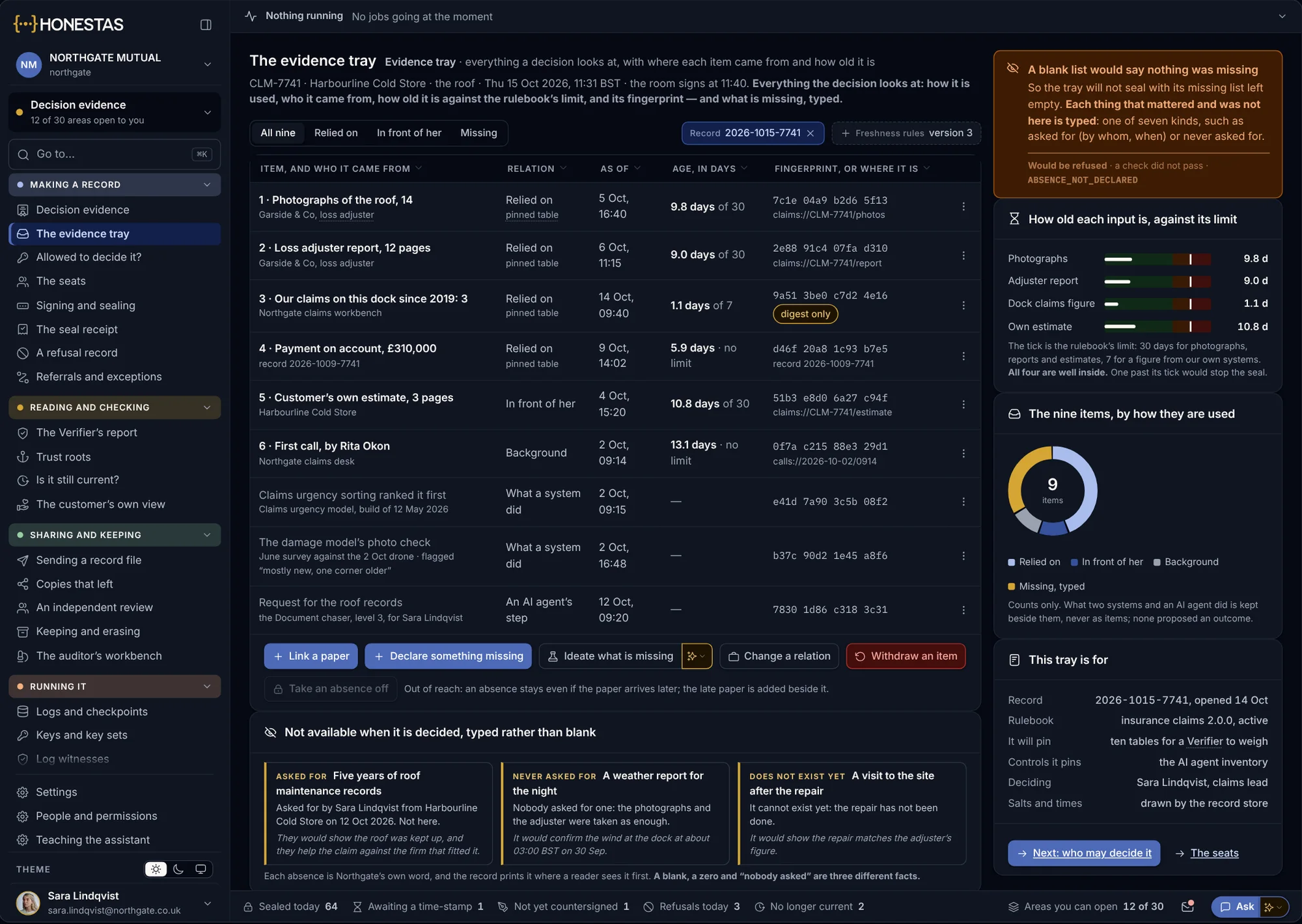
HONESTAS reads through each system's own interfaces, exports and events. There is no migration and no second copy to keep in step. What a decision read is fingerprinted, so anyone can later tell whether the source has changed since.
- Reads through the system's own interfaces
- Each item kept with its source and time
- A fingerprint shows if the source changed later
Every write-back checked, and its answer kept.
When a sealed decision changes a reserve, releases a payment or updates a policy, HONESTAS sends the change through a checked step, never a direct update. The signer's authority, the amount and the state of the claim are checked first. What was sent and what came back are recorded with the decision.
- Sent only after the decision is sealed
- Checked against authority and the record
- A refusal by your system is recorded too
One decision at a time. Weeks, not months.
You start with one decision and only the systems it reads. Your engineers and ours work side by side, and nothing writes back until your team has watched it run.
Pick one decision
Choose a decision AI already helps with, such as motor claims intake, a reserve review or a renewal price.
Map what it reads
List the systems and fields the decision needs, and who may see each one.
Connect, read only
Connect those systems in a test space, read only, and check that every item arrives with its source.
Run beside your team
Real cases go through the rooms beside your current process. Your team compares the results before anything changes.
Turn on write-backs
Switch on write-backs one kind at a time, starting with the smallest, each checked and recorded.
Go live, then the next
The decision goes live with its own rules and authorities. The next one reuses the connections you already have.
Your directory decides who. Your partners stay behind their walls.
Sign-in, accounts and authority come from the systems you already trust. Messages to other firms are checked before they leave.
Identity and authority
People sign in with your own SAML or OIDC provider, and SCIM keeps accounts in step with your directory. Who may decide what comes from your own authority tables, and a change to them is itself a recorded decision.
Brokers, coverholders and reinsurers
ACORD and BiPRO messages and agent-to-agent links connect you to partners. Each message is checked against the walls between firms before it is sent, and kept with the decision it belongs to.
Connecting your systems.
Do we have to migrate any data?
No. HONESTAS reads each system as it is and keeps only what a decision used, with its source. Your core systems stay the system of record.
What if our policy or claims system is our own build?
That is common. HONESTAS reads from its interfaces, database views, exports or event streams, whichever your team prefers to expose.
Can HONESTAS change data in our systems?
Only through a write-back you have switched on, after a decision is sealed and the signer's authority is checked. Each write-back is recorded with your system's answer.
How long does a first connection take?
Weeks rather than months for one decision and the systems it reads. Each decision after that reuses the connections already in place.
Is there an API for our own apps?
Yes. Everything in HONESTAS can be reached through its API, with the same permissions people have. See the developer pages.
Go deeper
Bring one decision and the systems it reads.
We will map the connection with your team and show you the first decision running beside your process.