

The model works. Nobody can sign for it.
Models sit in staging when nobody can say who owns them, what they were checked against or who may promote them. HONESTAS registers each model with a named owner, gives the validator the evidence they need and runs a promotion gate that a named person signs. In service, every decision is pinned to the model version it used.
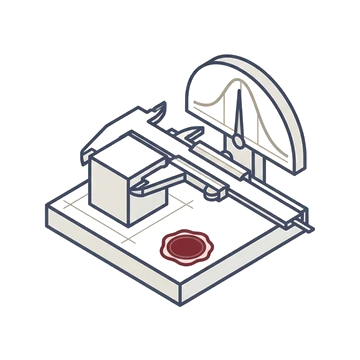
AI is already in the book. Signing for it is the hard part.
Most insurers already use AI somewhere. Supervisors expect each system to have an owner, documentation, human oversight and records, and life and health pricing models become high-risk under the AI Act. A model nobody can sign for stays in staging, or goes live with nobody's name on it.
Sources: EIOPA, digitalisation report, 30 April 2024 (2023 market survey) · EIOPA opinion on AI governance · Regulation (EU) 2026/1744.
Register it, check it, and let a named person promote it.
Your models stay in your registry and run where they run. HONESTAS keeps who owns each one, what it was checked against and who let it into service.
Register
Each model from MLflow, SageMaker or your own registry is registered with its owner, purpose, data and version. A model that is not registered cannot be used in a decision.
Validate
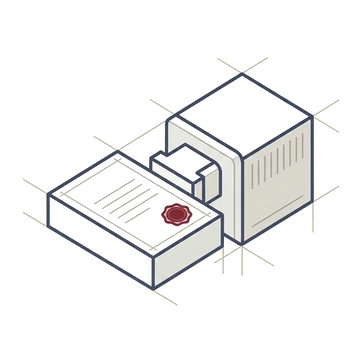
The validator gets the back-tests, fairness checks, a comparison with a second model and where the data came from, and can re-run every test.
The promotion gate
The owner asks, an independent validator signs and an approver with the authority promotes. Nobody can approve their own model.


In service
Every decision is pinned to the version it used. When a model drifts past your threshold, a room opens for its owner to retrain, restrict or withdraw it.
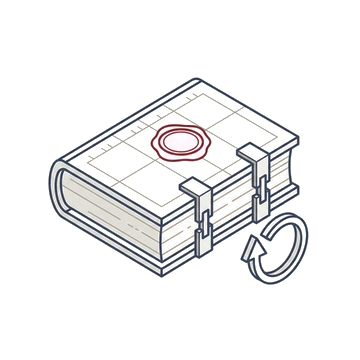
Every model, every version and who let it in.
These are HONESTAS screens, shown with sample data from Northgate Mutual, a sample organisation.
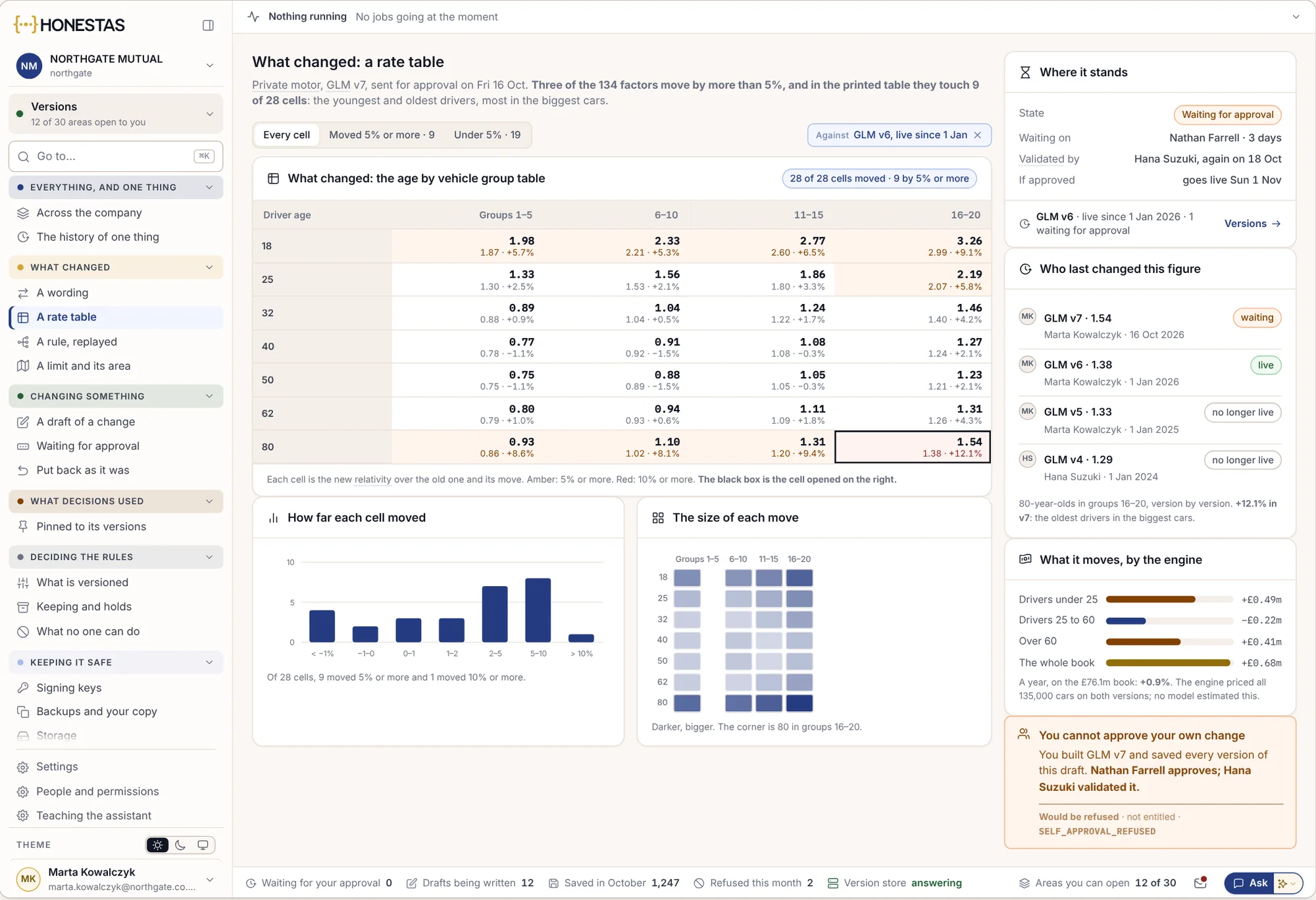
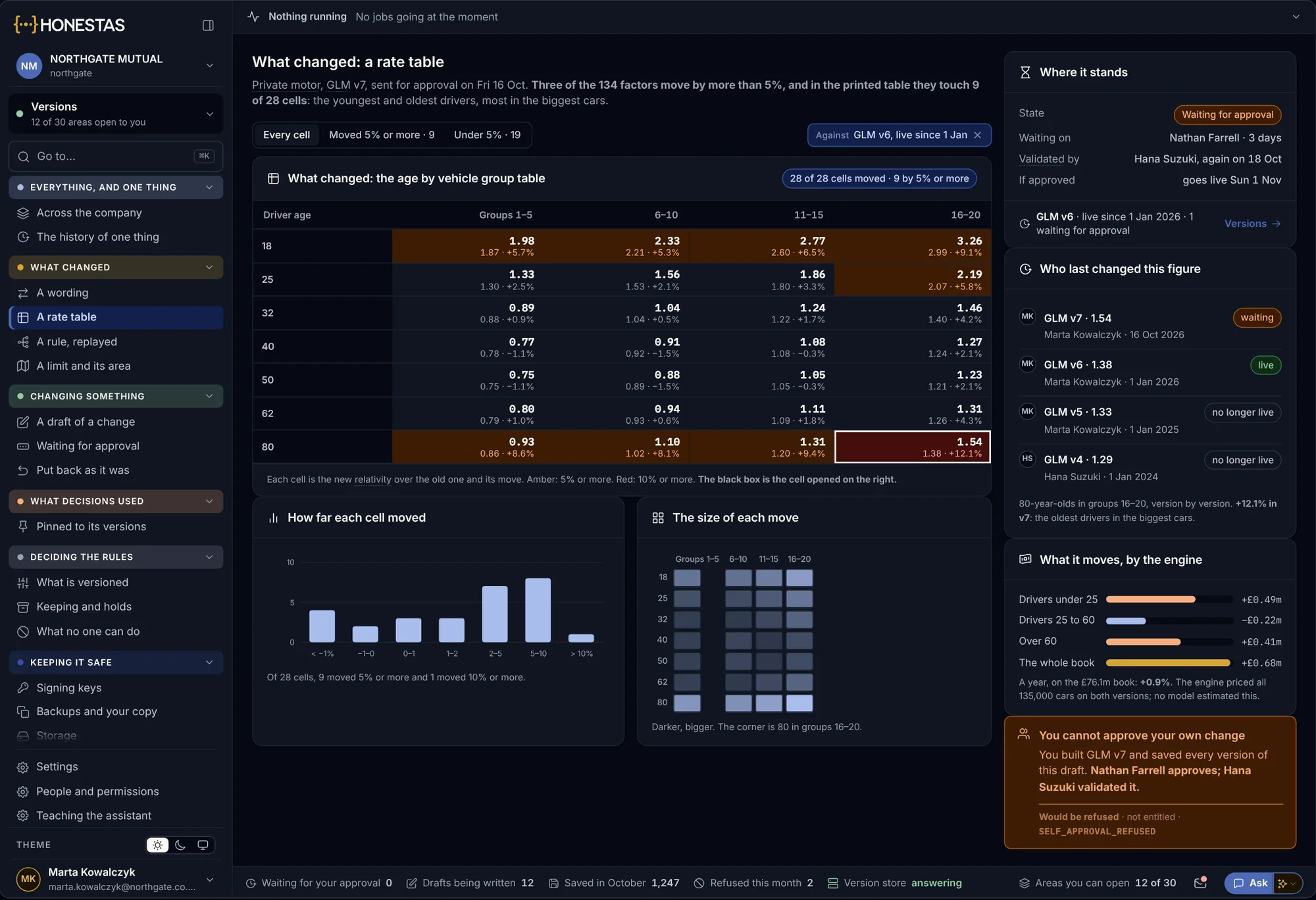
A new model version, waiting
A pricing model's new version, cell by cell against the live one, with who validated it, who must approve it and when it would go live.
- Every version of each figure kept
- Validated, then approved by someone else
- The author cannot approve it
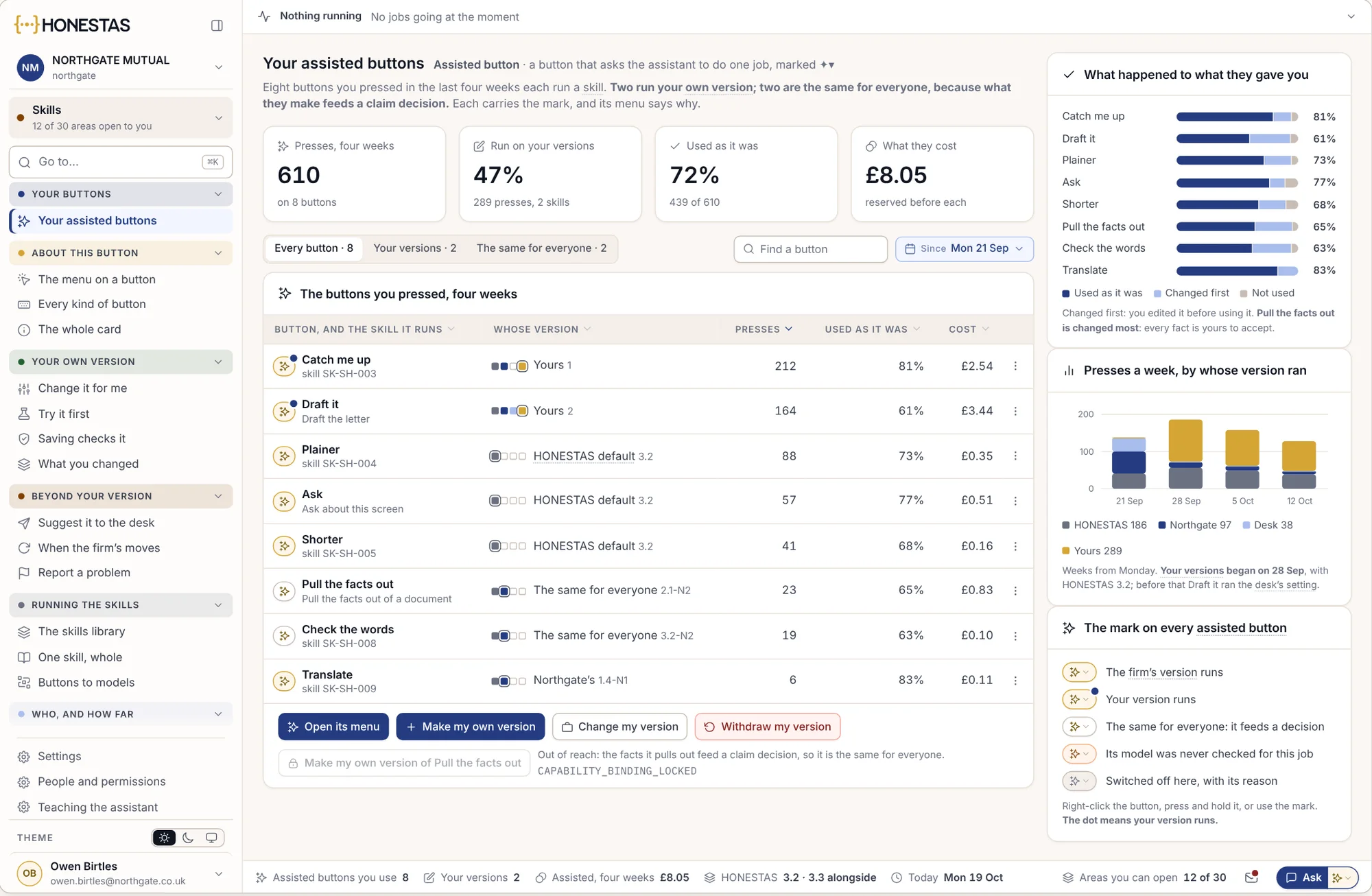
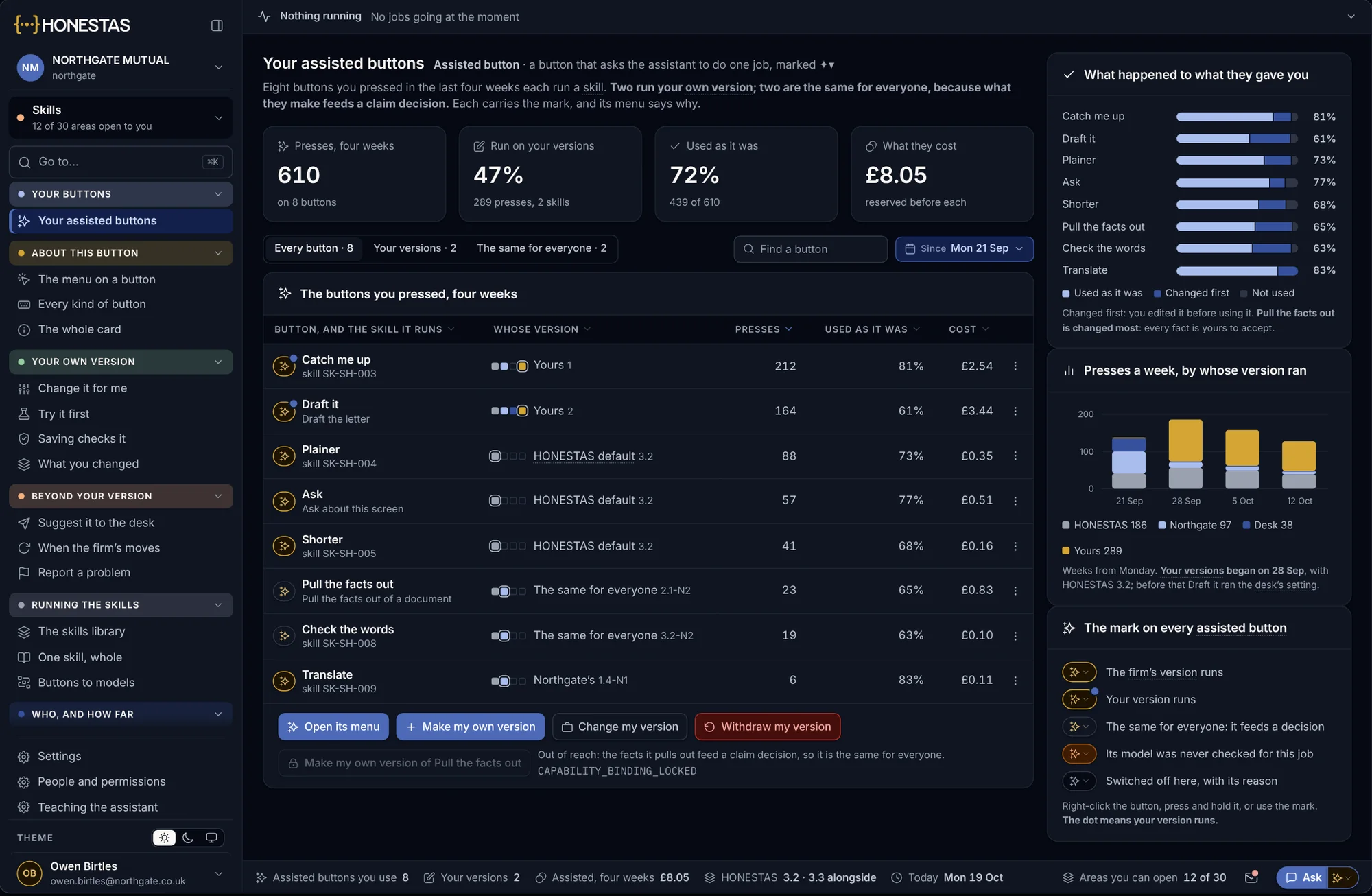
Every AI button and its version
Each button that asks the assistant to do a job shows the version it runs and what it costs. A button whose output feeds a claim decision runs the same version for everyone.
- Whose version each press ran
- How often the output was used as it was
- A mark when a model was never checked for the job
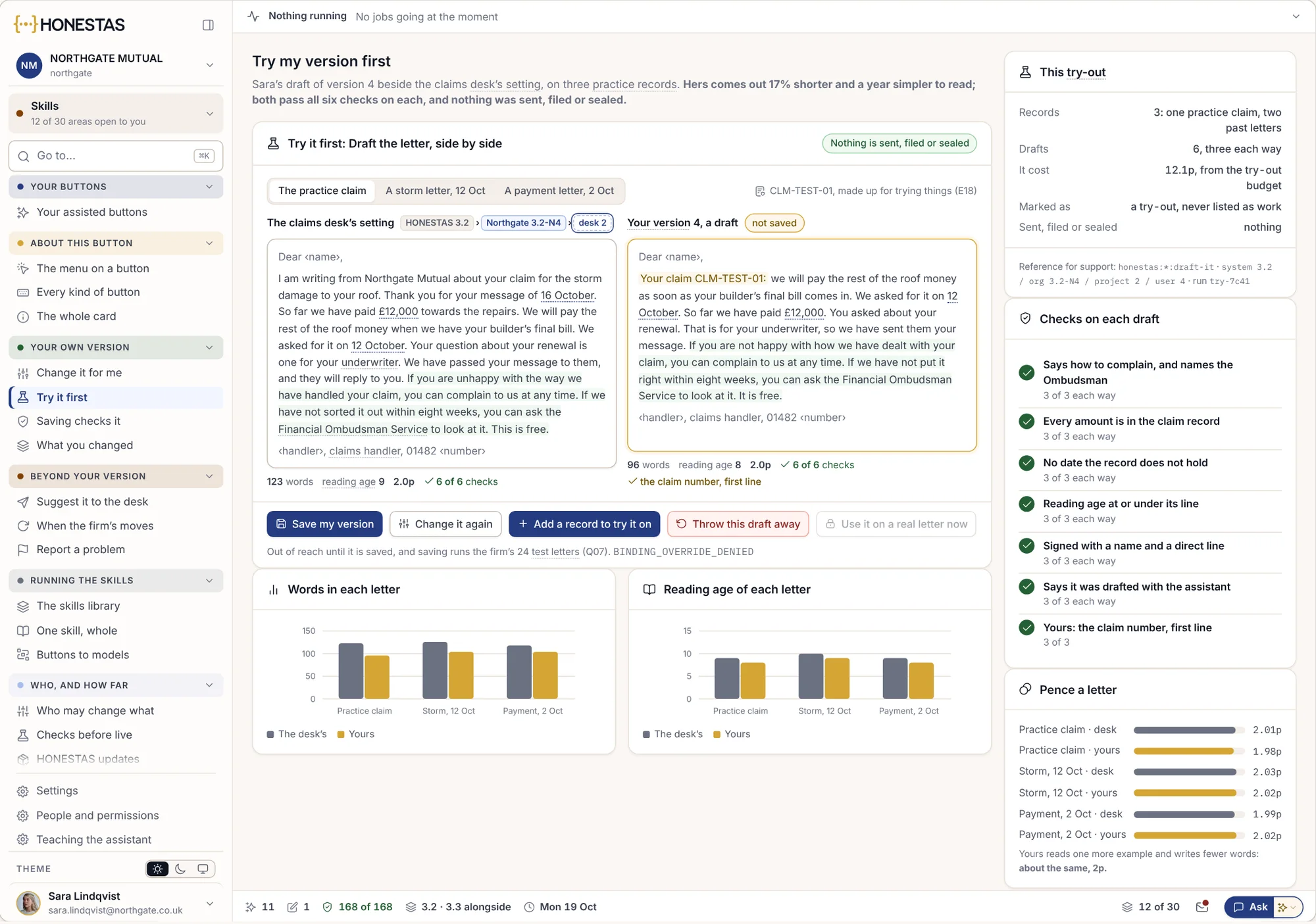
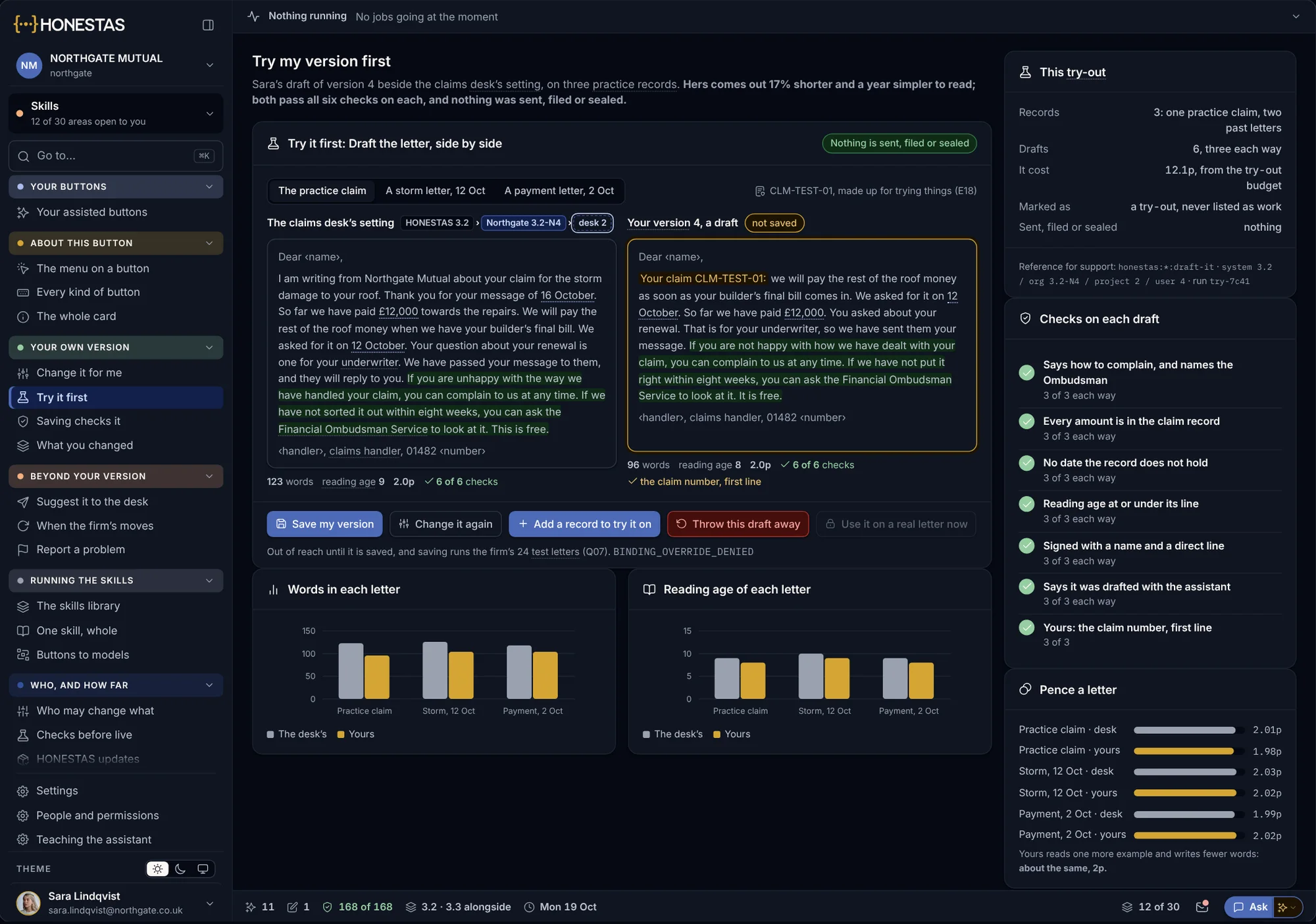
Tried on practice records first
A new version runs beside the current one on practice records, through the same checks. Nothing is sent, filed or sealed until it is saved and approved.
- Side by side on the same records
- Every check, on every draft
- What each version costs
What a button runs, from the button
Right-click any AI button and its menu says what it does, which skill and version it runs, which model answers, and the cost of its last run.
- The model named, and why it was chosen
- Only the firm changes the model
- A reference for support on every run
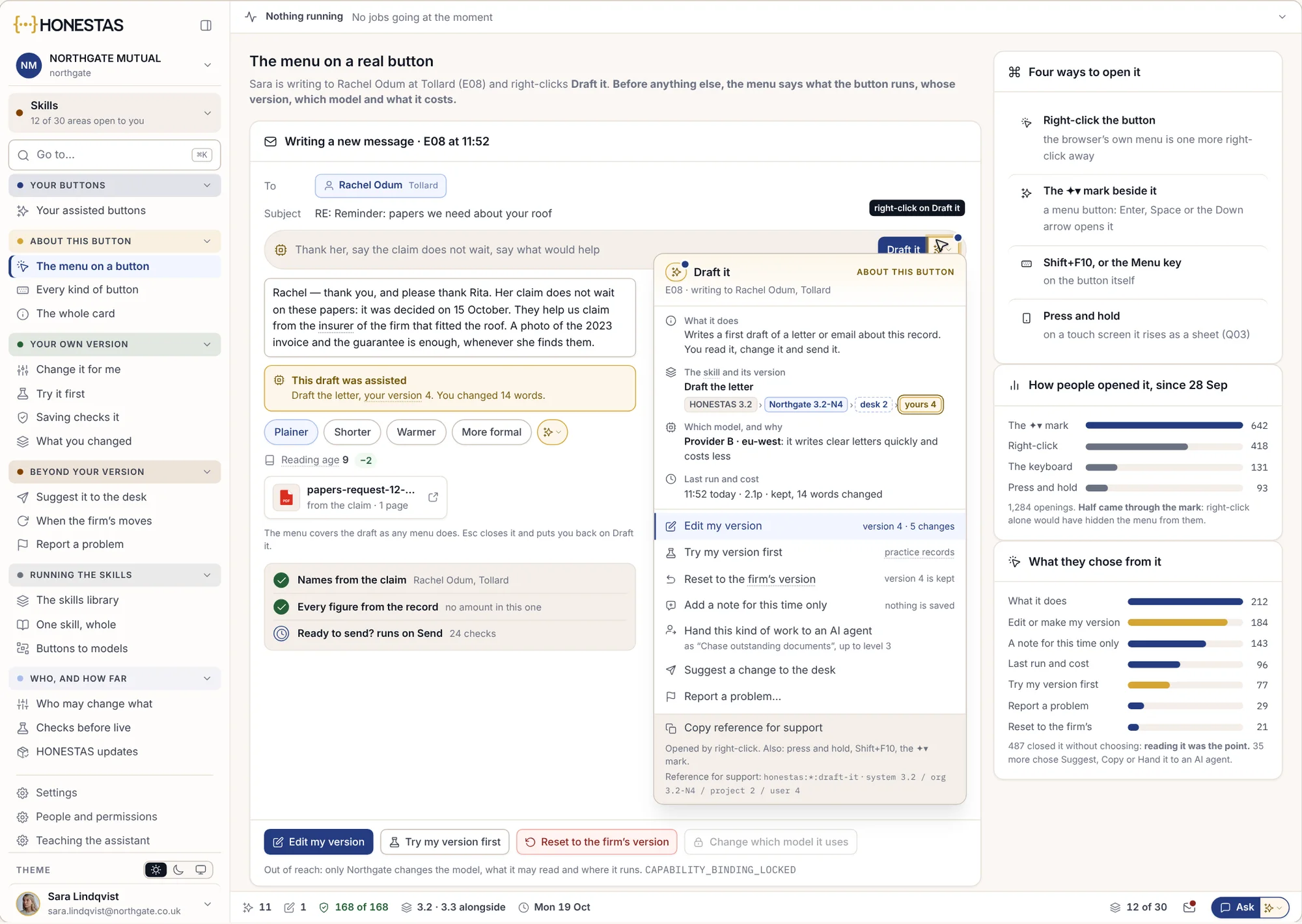
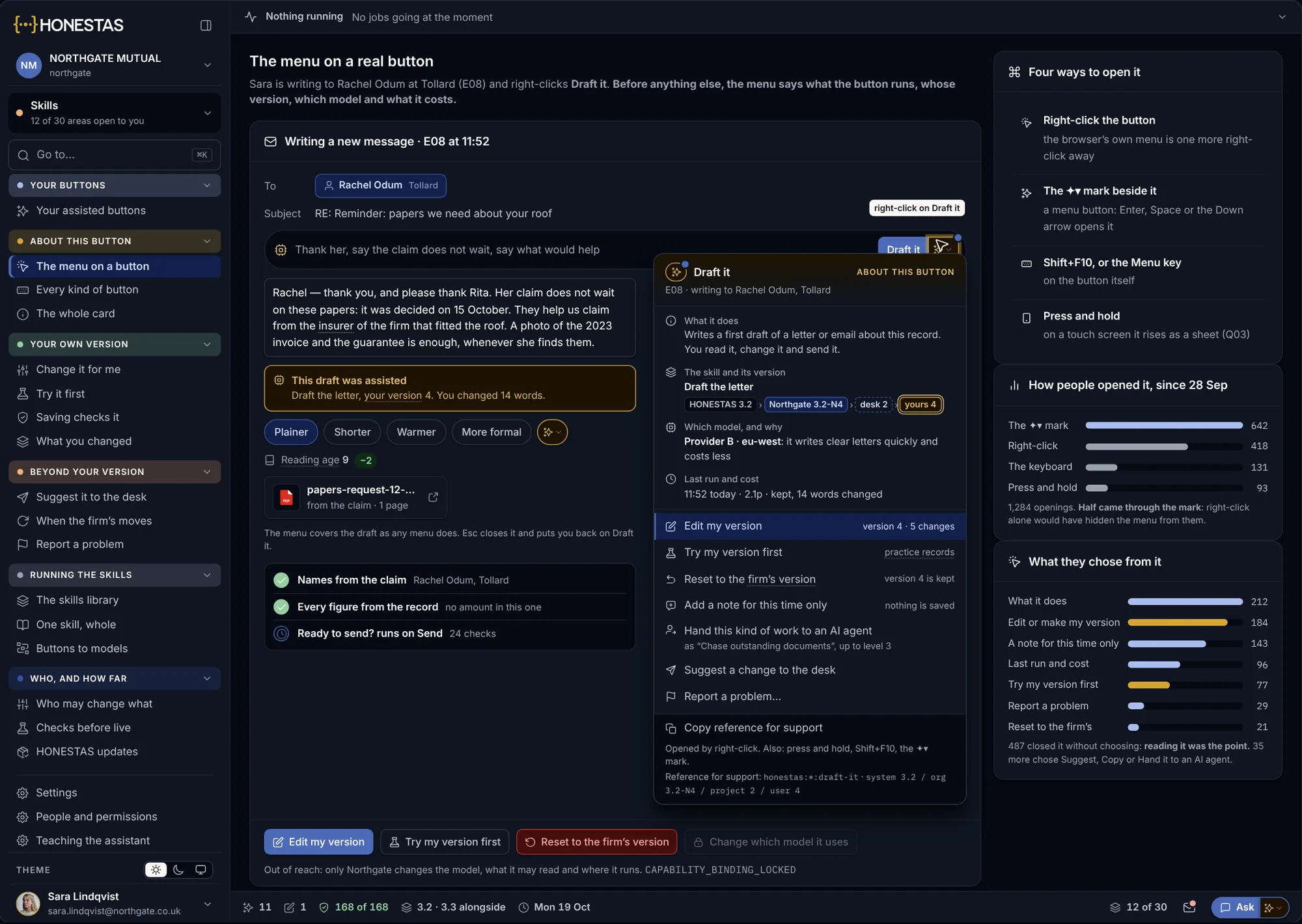
The evidence a validator needs, kept from the first version.
Registration, validation and promotion records are linked to the rules that ask for them.
- EU AI Act, high-riskRegulation (EU) 2024/1689, Annex III 5(c)Risk assessment and pricing in life and health insurance is high-risk AI from 2 December 2027.
- EU AI Act, requirementsRegulation (EU) 2024/1689, Articles 9 to 15Risk management, data governance, technical documentation, logs, human oversight and accuracy.
- Solvency II validationDirective 2009/138/EC, Article 124A regular cycle of validation for internal models, with its results documented.
- EIOPA opinion on AIAI governance and risk management, 6 August 2025Supervisors' expectations for data, records, fairness, explainability and human oversight.
AI Act dates as amended by Regulation (EU) 2026/1744, the Digital Omnibus, published in the Official Journal on 24 July 2026. Not legal advice.
Measure the wait between ready and in service.
These are the measures a head of models or chief actuary tracks, read from the registration, validation and promotion records themselves.
- In staging
- Models ready for service but not promoted, and how long each has waited.
- Named owner
- The share of models in service with a named, current owner.
- Open findings
- Validation findings still open, and their age.
- Promotion time
- Days from a request for validation to a signed promotion.
- Pinned decisions
- The share of decisions pinned to the model version they used.
- Drift
- Models past their drift threshold, and how long until their owner decided.
- Refused approvals
- Attempts to approve one's own model, refused at the gate.
Model deployment, in practice.
Which model registries does it read?
MLflow, SageMaker and your own registry. Each run and version is kept, with the data and code it came from.
Do our models have to move?
No. They stay where they run today. HONESTAS keeps the registration, the evidence and the promotion record, and checks that a decision only calls a promoted version.
Who can promote a model?
An approver whose authority covers that model, after an independent validator has signed. The person who built it cannot approve it, and the gate refuses if they try.
What happens when a model drifts?
A room opens for its owner with the evidence of the drift. They retrain, restrict or withdraw it, and the decision is sealed like any other.
Go deeper
Bring the model that has waited longest.
We will register it with you, show the validator's evidence and walk it through the gate to a signed promotion.